

Liability Transactions pertain to borrowing and repaying funds. Borrowing Funds involves taking out loans or lines of credit. Journal entries are indispensable to maintaining financial coherence and enabling accurate financial reporting. In this tutorial, you will learn – What is Drawing, Expenses and Revenue in accounting with real-life examples. An employee makes an accounting error that overcharges a client by $300 who had ordered muffins for an office meeting. The company refunds the client $300 in cash from the register.
General Journal Examples: Entry Formats with Calculations—Let’s Get Technical

A cash book is like a bank ledger but is formatted differently. If the bank account went into overdraft then the closing balance would be on the right-hand side of the ledger. Businesses that use bookkeeping software may find that the numbering system is already set by the software based on the software company’s numbering choice.
Transaction: The owner invested $2,000 of personal funds into the business.
Journal Book is maintained to have prime records for small firms. After preparing the journal book, the transactions are then posted to Ledger. A Journal is a book in which all the transactions of a business are recorded for the recording business transactions examples first time. The process of recording transactions in the journal is called Journalising and recorded transactions are called Journal Entries. Now that these transactions are recorded in their journals, they must be posted to the T-accounts or ledger accounts in the next step of the accounting cycle.
Various Types of Journal Entries
- The journal entry is an essential component of the double-entry bookkeeping system.
- For such scenarios, setting up or adjustment for bad debt expenses is made.
- Pen World Ltd. has the following transactions during the month of Feb-2019.
- Actually, we simply transferred the amount from receivable to cash in the above entry.
- They’re typically made at the end of an accounting period to record revenues and expenses in the period they occur, not necessarily when cash changes hands.
- On the other hand, Credit, which is abbreviated as Cr, refers to the right side of an account.
Avoid common mistakes and automate the process with reliable financial reporting software for efficiency. Next, check out our articles on how to calculate burn rate, cash vs. accrual accounting, and 10 best peo companies in 2024. If you find out your inventory was understated by $500, debit Inventory and credit Cost of Goods Sold by $500 to correct it. If you misclassified $200 of insurance as office supplies, you’ll correct it by debiting Insurance Expense and crediting Office Supplies Expense by $200. If an owner injects $5,000 into the business, debit Cash and credit Owner’s Equity by $5,000. If you deem $200 of receivables as uncollectible, debit Bad Debts Expense and credit Accounts Receivable for $200.
Cash
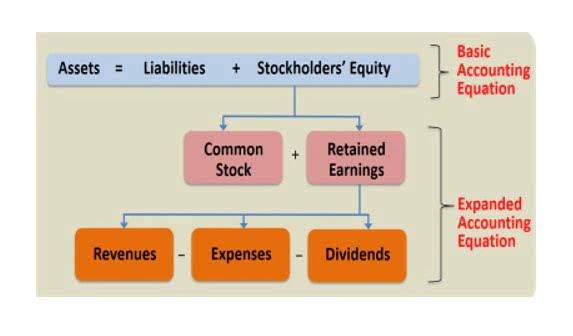
By tracking expenses, income, and payments properly, you can avoid financial confusion and grow your business faster. We know from theaccounting equation that assets increase on the debit side anddecrease on the credit side. If there was a debit of $5,000 and acredit of $3,000 in the Cash account, we would find the differencebetween the two, which is $2,000 (5,000 – 3,000). The debit is thelarger of the two sides ($5,000 on the debit side as opposed to$3,000 on the credit side), so the Cash account has a debit balanceof $2,000. Accountants use special forms called journals to keep track of their businesstransactions. A journal is https://www.bookstime.com/articles/financial-risk the first place information is enteredinto the accounting system.
Every journal entry must have at least one debit and one credit entry, ensuring the accounting equation stays balanced. Exchanges in a business are determined based on their nature https://snowrunner.lt/account-balance-definition-types-and-examples/ and what accounts they will affect. The second step is recording them in their specific accounts and into the debit and credit columns. The general ledger serves as the eyes and ears of bookkeepers and accountants and shows all financial transactions within a business. Essentially, it is a huge compilation of all transactions recorded on a specific document or in accounting software.
Tips to Make an A in Accounting
- Recording transactions in accounting is a process where businesses enter transactions in journal books, cash books, ledger accounts, etc.
- Examples of adjusting entries include accruals (expenses incurred but not yet paid) and deferrals (payments made in advance for expenses that will be incurred later).
- Here is a screenshot of the Bank Transactions window in the free Manager accounting software.
- Recall that the general ledger is a record of each account andits balance.
- Journaling theentry is the second step in the accounting cycle.
- Meaning, will the information contained on this original source affect the financial statements?
As an entrepreneur and accounting professional myself, I aim to break down the fundamentals so you can feel confident recording and tracking your business finances. One person can specialize on sales journals while another can be responsible for the purchases journal. Using a computerized accounting system completely eliminates the need to create a journal entry such as the example above. This is already automatically done in the background by the system as you enter the details of a transaction in the fields provided by the software. Debiting or crediting an account can either increase or decrease the balance of an account.
Journal Entry for Prepaid Expense Adjustment:
No, our business does not perform business transactions on behalf of customers. We provide information, guidance, and support to help businesses manage and understand their own transactions effectively. First, clearly identify the type of business transaction you need help with. According to an external audit, Wirecard had been creating fake transactions for years to conceal large debt and boost its financial position.
- They ensure transparency, accuracy, and compliance while preparing the general ledger.
- When it comes to accounting, non-financial transactions are those in which equity, expenses, liabilities, and income remain unchanged.
- They make the business more attractive to potential investors by demonstrating financial stability and transparency.
- For example, if you pay a bill, your cash account will be affected because money will go out.
- You’d use a deferral entry when a customer has prepaid but you haven’t done the work.
Examples of Journal Entries with a PDF
Taking this online course is also useful if you want to refine your skills in understanding double-entry accounting. In this online course, you will gain knowledge and hone your financial literacy skills. By the end of the course, you will become a more financially intelligent person who is no longer scared of numbers. Also, you will learn to read, understand, and analyze financial statements.

These entries follow the fundamental rule of double-entry accounting and bookkeeping, where every debit is matched with the corresponding credit. Journal entry and general ledge both use a double-entry system to record transactions, essential to managing a business’s financial records. But if you’re willing to put a bit more work into your bookkeeping, double-entry bookkeeping can pay off in the long run by making it easier to prepare financial statements. Let’s say you recorded income earned but not yet received at the end of the month. When you actually get paid, reversing the initial entry prevents you from counting the income twice.