
The lawsuit between Red Cat Holdings’ Teal Drones and Vector may be filed in Utah, but there could be further fallout from this. There could be weight applied in Washington, not just Salt Lake City. What is unfolding is not just a private-sector IP dispute , it has questions that could result in a direct challenge to the trust model that underpins the Department of Defense’s engagement with the U.S. and Global innovation base.
Vector’s CEO is not an outsider to that ecosystem. He was a career military officer whose last posting, from September 2023 through June 2024, was inside the Pentagon’s Office of Strategic Capital. His title? Director of Army Investments, with a concurrent role as Co-Director of Strategic Engagement.
That trusted position comes with intimate proximity to some of the most sensitive technologies, investment strategies, and commercial partnerships in the U.S. defense space.It is a role predicated on confidentiality, fiduciary restraint, and an unambiguous firewall between government knowledge and private commercial activity.
The court filings in Teal vs. Vector allege that individuals from Vector, toured Teal’s facility. What followed, according to the complaint, involved conduct that, if proven, could be classified as corporate / industrial espionage. These are not my words ; they are the allegations that Red Cat’s legal team have placed before a judge.Red Cat is a publicly listed company. It operates under the scrutiny of institutional investors, SEC reporting obligations, and internal governance that does not allow frivolous legal filings. They are not chasing social media engagement. They are pursuing a legal relief pending possible financial remedy.
If those allegations survive challenge by Vector, we are not simply debating whether Vector has a product or an edge in the drone market. We are confronting a far more consequential question: if the CEO of Vector believed such conduct was reasonable within the commercial sphere just after having his post in Washington, then if this is found in Favour of Teal, then what confidence should anyone have that the intellectual property and proprietary data he accessed while serving in the Office of Strategic Capital is untouched, un-compromised, and may bring questions in the minds of innovators that perhaps anything presented in that timeframe could now be open to have been surreptitiously duplicated or repurposed?
This is where the Utah courtroom becomes a possible catalyst for take up by the Department of Defense Inspector General, congressional oversight committees, and federal investigators, where they must ask:
- Have any technologies, concepts, or investment intelligence acquired through Pentagon channels subsequently been leveraged for Vector’s commercial benefit?
- Are there any records or indications to suggest that any private-sector innovators unknowingly briefing a future competitor under the guise of a trusted DoD investment official?
- How can the Pentagon assure current and future partners that their proprietary disclosures will not follow departing officials into the portfolios of their own private ventures?
The defence innovation sector operates on two currencies: capability and trust. Lose capability and you lose a market. Lose trust and you lose the supply chain, the capital flow, and the will of innovators to work with you. If the allegations in Teal vs. Vector stand up in court, they don’t just burn Vector’s brand , they could then move rapidly to then char the connective tissue between critical government innovation programmes and the companies they seek to accelerate.
This is why the Pentagon must be cognisant of the ramifications of this case and treat this not as an isolated corporate squabble but contemplate a potential breach of its own institutional safeguards. We are now in a situation where a single compromised actor could cast doubt on the entire Office of Strategic Capital’s credibility. And that doubt will not remain domestic , allies, foreign partners, and joint development programmes will all be asking the same question: how secure is our data when we share it with those entrusted in Washington?
The Pentagon spends hundreds of millions every year on innovation outreach precisely to pull cutting-edge technology into its operational base faster. That effort depends on founders, engineers, and investors believing that what they share in secure settings will remain secure. If the firewall or trust appears porous, the model collapses.
For Vector, the immediate legal and reputational horizon is stark. A preliminary injunction could halt operations. Federal attention could expand the scope of discovery far beyond Teal’s complaint. Investors could see not just a startup risk, but a federal investigation risk. Defence primes and procurement officers will avoid even the perception of contamination ; there are always safer vendors This is why the CEOs past service, far from shielding him, substantially raises the stakes. Military service does not confer immunity from commercial accountability. If anything, it imposes a higher standard, because the breach, if proven, is not merely a matter of corporate misconduct; it is likely going to raise further questions of possible betrayal of a public trust, accepted by the presence of a military commission and a uniform.
The Utah court will rule on the commercial dispute. But regardless, Washington must decide whether the integrity of its technology capture and investment arm faces a full investigation. The implications are too large, and the precedent too dangerous, to view this as just another IP fight between defence startups. Because if this injunction is upheld in Utah, then the Department of Defense then possibly faces a crisis of confidence with industry that could take years to repair.
Related
Discover more from sUAS News
Subscribe to get the latest posts sent to your email.
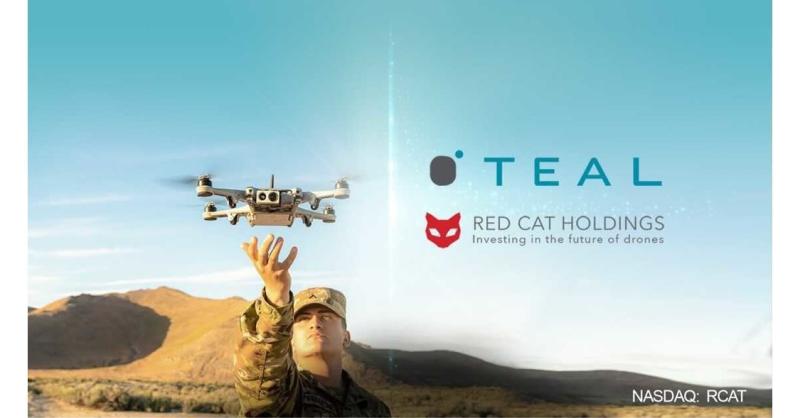
Red Cat Holdings, Inc. (Nasdaq: RCAT) (“Red Cat” or the “Company”), a hardware-enabled software provider to the drone industry, today announced that its subsidiary Teal Drones has been awarded a firm-fixed-price, multiple-award blanket purchase agreement (BPA) by the United States Customs and Border Protection as one of five contractors. The BPA has an estimated value of $90 million in total over a 5-year ordering period.
Through the BPA, Department of Homeland Security agencies can place orders for unmanned aircraft systems (UAS). The drones will provide supplemental airborne reconnaissance, surveillance, and tracking capability to enhance situational awareness for field commanders and agents in areas that lack nearby traditional surveillance systems or available manned air support.
“We are honoured Teal was selected to provide U.S. manufactured drones that meet the rigorous technical requirements of the Department of Homeland Security. This award is a milestone achievement for George Matus and the entire Teal team, and to the foundation, they have built over the past decade in arriving to this point,” commented Red Cat CEO Jeff Thompson.
“We look forward to fulfilling all orders placed under this agreement, along with any others that we may receive, and making full use of Teal’s new 26,000-square foot facility in Salt Lake City.
Given the security mandates within the Department of Defense and Federal Government, as well as the recently passed infrastructure bill that has a ‘Build America Buy America’ mandate, we are confident in our ability to offer domestically-sourced drone solutions and services across both Enterprise and Government applications.”
About Red Cat Holdings, Inc.
Red Cat provides drone-based products, services, and solutions through its five subsidiaries and services the enterprise, military, and consumer markets. Teal Drones is a leader in unmanned aircraft systems (UAS), and its Golden Eagle is one of only five drones approved by the Department of Defense for reconnaissance, public safety, and inspection applications. Skypersonic’s technology enables drones to complete inspection services in locations where GPS is not available, yet still record and transmit data even while being operated from thousands of miles away. Fat Shark is a leading provider of First Person View (FPV) video goggles. Rotor Riot, LLC is a reseller of FPV drones and equipment, primarily to the consumer marketplace. Red Cat Propware is developing a Software-as-a-Solution (“SaaS”) platform to provide drone flight data analytics and storage, as well as diagnostic products and services. Learn more at https://www.redcatholdings.com/.
]]>