
- UK government investigates rising misuse of radiofrequency jammers to commit crime, from hacking video doorbells to enable burglaries to bringing airports to a halt
- Devices, disguised as everyday tech like digital watches, are being used by criminals to commit theft and disrupt public services people rely on daily.
- Possessing a jamming device could be made illegal as part of crackdown, subject to public and industry views in new call for evidence launched today
A crackdown of radio frequency jammers, which are designed or modified to block or interfere with wireless communications, is on the cards under government action outlined today.
From blocking GPS signals in vehicles to aid theft, to compromising positions during military operations, misuse of these gadgets happens at all levels of criminal activity, posing a real and growing risk to people and critical national infrastructure.
Criminals often disguise radiofrequency jammers as everyday objects to break into homes by disabling security systems, such as video doorbells, or break into vehicles bypassing security systems and quickly emptying vans of tools. These devices are also used in shoplifting to block wireless security tags, preventing alarms and making theft easier. Additionally, jammers can interfere with mobile coverage and emergency radio networks – hindering how emergency services respond to incidents.
Just one week of disruption to the UK’s vital positioning, navigation and timing infrastructure, caused by these devices, could cost the UK economy up to £7.62 billion – threatening jobs, businesses and ways of life.
In response, the government is seeking views from the public and key industry stakeholders across the country, including mobile network operators, law enforcement agencies and specialists from the transport and infrastructure sectors, on the current regulations and enforcement for the jammers.
UK Telecoms Minister, Liz Lloyd, said:
We are stepping up efforts to stop the illegal use of jamming devices which are threatening not only our daily lives, but also our vital public services across the country.
This is an opportunity for the public and industry experts to have their say on how we safeguard our homes, businesses, transport networks and more from those seeking to exploit these technologies.
By gathering a broad range of informed opinions, we can make sure any future measures we introduce are rooted in evidence and address the real issues people area facing.
The Wireless Telegraphy Act 2006 bans the use and possession of non-compliant equipment, but proving a person used a jammer to cause interference can be difficult to evidence. The Crime and Policing Bill will make it illegal to possess or share electronic devices used to steal cars and could lead up to 5 years in prison.
The insights from this call for evidence could inform legislation on the possession of all other types of jamming. It will clarify the legitimate uses of radiofrequency jammers, like in secure environments such as in prisons to prevent inmates from using contraband mobile phones or military exercises in combat, and how current regulations could be improved.
Feedback from this call for evidence will inform any future legislation so that any new measures are based on evidence and proportionate, while effectively protecting critical national infrastructure from illegal threats.
Related
Discover more from sUAS News
Subscribe to get the latest posts sent to your email.

Ukrainian-born aviation production holding Skyeton has integrated a radiation sensor payload into its Raybird unmanned aviation system (UAS), expanding the platform’s capabilities for environmental monitoring, emergency response, and post-incident assessment missions.
The new payload enables real-time aerial radiation detection, mapping, and data transmission over extended distances, combining Raybird’s long-endurance performance with advanced sensing capabilities. The gamma radiation detection module is installed inside the UAV’s fuselage, ensuring aerodynamic balance, structural protection, and stable operation during long-duration missions. The system has been tested in the Chornobyl exclusion zone in Ukraine, validating its operational stability and measurement accuracy in a high-risk environment.
In 2025, Skyeton developed and delivered the first radiation sensor-equipped Raybird system to the State Emergency Service of Ukraine. Since then, the system has been on full operational duty, supporting continuous monitoring tasks and strengthening national emergency response capabilities.
Roman Knyazhenko, CEO of Skyeton: “Raybird has demonstrated its reliability in the most hostile conditions. We rely on it to help make our home safer, and the integration of radiation monitoring capabilities was driven by that very need. Today, it is part of the national emergency response system.”
The radiation sensor module is fully integrated into the aircraft’s onboard systems and ground control interface, enabling operators to receive real-time radiation data alongside standard flight telemetry.
Operational testing in the Chornobyl zone confirmed the system’s ability to:
- Conduct wide-area radiation reconnaissance
- Perform targeted hotspot detection
- Maintain stable data transmission over long-duration flights
- Operate reliably in varying temperature conditions
Beyond emergency response, the radiation monitoring configuration applies to disaster management, industrial safety oversight, infrastructure inspection, and post-incident environmental assessment.
Combat-proven in Ukraine with over 350,000 accumulated flight hours, Raybird continues to evolve as a modular airborne system capable of integrating high-value, mission-specific payloads while preserving its core operational advantage: long endurance combined with reliability.
About Raybird UAS:
Raybird is a small tactical unmanned aviation system designed for long-duration ISR and ISTAR missions.
Key characteristics (ICE version):
- Flight endurance: 28+ hours
- Maximum flight range: 2,500+ km
- Operating ceiling: 5,500 m
- Real-time data link: 220+ km, or unlimited with SATCOM integration
- Propulsion: EFI four-stroke gasoline engine
- Operating temperatures: -35°C to +55°C
- Deployment time: Up to 25 minutes
Raybird supports a wide range of interchangeable payloads, including multisensor EO/IR gimbals, aerial cameras, SAR systems, radio frequency locators, and specialized mission sensors such as radiation monitoring modules.
Related
Discover more from sUAS News
Subscribe to get the latest posts sent to your email.

Supporting mobile air defence requirements with high performance electro-optical targeting systems
Horsham – January 2026, Chess Dynamics, part of the Cohort plc Group, has been awarded a £1.4 million order from a major weapon system prime for a number of Hawkeye EOSS systems. The equipment will be integrated into mobile air defence units, providing the necessary advanced electro-optical targeting of hostile air-borne threats.
The Hawkeye EOSS delivers long range detection, identification and tracking through a combination of high resolution optical and thermal imaging sensors, advanced AI-enhanced tracking algorithms and a high-precision positioner designed for operation in demanding environments. The order reflects the rapid shift in defence requirements away from static installations towards agile, expeditionary sensor systems.
Mark Byfield, Business Development Director at Chess comments, ‘We are pleased to be part of a very effective, proven high performance system by working closely with our prime customer. As mobile air defence platforms become ever more important, this contract underlines the need for such systems to incorporate sensor capability that is able to keep pace with shifting threats.’
In addition to long range target acquisition, the Hawkeye EOSS incorporates Chess’ DEFT AI-enhanced tracking algorithms to ensure robust capture and track maintenance of hostile targets.
This latest order strengthens Chess Dynamics’ position in the mobile air defence domain and reflects the growing requirement for sensor systems that deliver clarity, speed and resilience in rapidly evolving operational environments.
For more information, please visit www.chess-dynamics.com
About Chess Dynamics – Chess Dynamics is a systems house providing integrated solutions for surveillance, fire control, and precision positioning for land and maritime applications.
Chess’ portfolio of proven surveillance and fire control solutions also includes counter-sUAV (drone) protection systems, the Vision4ce branded real-time video and image processing solutions for electro-optic systems.
The company also provides a complete service including survey, installation, training, and maintenance across its entire product range, including bespoke engineering solutions.
Chess has been a trusted supplier of equipment and systems to defence leaders and prime contractors since 2005. As a subsidiary of the Cohort group, Chess Dynamics has three locations across the UK and is led by David Tuddenham.
Chess Dynamics is a subsidiary of Cohort plc – an independent technology company and the parent company of seven innovative, agile, and responsive businesses; Chess, EID, ELAC SONAR, EM Solutions, MASS, MCL and SEA, which provide a wide range of services and products for international customers in defence, security, and related markets.
www.cohortplc.com
Related
Discover more from sUAS News
Subscribe to get the latest posts sent to your email.

We’re proud to announce the signing of a Memorandum of Understanding (MoU) with Unmanned Defense Systems UAB (UDS), a leading Lithuanian developer of unmanned defense platforms. Through this partnership, we will integrate 5G Non-Terrestrial Network (NTN) connectivity via our LEO satellite fleet into advanced defense drone systems.
In a recent collaboration with Airbus Central Research, OQ Technology successfully demonstrated a LEO-to-Drone 5G NTN link over MSS S-band, achieving ~5 kbps throughput with ~99.95% connection continuity even during aerobatic maneuvers, a world-first milestone showcasing the resilience of satellite 5G connectivity for aerial platforms.
This collaboration combines OQ Technology’s Direct-to-Device 5G NTN connectivity over MSS S-band and upper C-band, with UDS’s defense expertise to deliver secure communications, resilience, and global operational reach for next-generation unmanned operations.
Related
Discover more from sUAS News
Subscribe to get the latest posts sent to your email.

BEFORE FURTHER FLIGHT
Urgent Bootloader Update needed on Here4. If your Here4 doesn’t breath blue on boot, then you MUST do this bootloader update
All Here4 users need to update the bootloader on their Here4 units BEFORE FURTHER FLIGHT.
For units NOT showing blue breathing at boot
The process for doing this update is as follows:
For units already showing solid White LED (NOT breathing)
If you have appropriate SWD connector (6pin JST SUR) to Here4 available, and are capable of doing a bootloader update. Follow the following steps:
For STLink:
For JLink:
Important: For users that are not capable of opening Here4 unit and updating using JST SUR and Debug probe to fix solid white LED, please contact your Reseller for further support. For units that are still healthy make sure to follow primary bootloader update method.
Additional Resources:
Related
Discover more from sUAS News
Subscribe to get the latest posts sent to your email.

Teledyne FLIR OEM, part of Teledyne Technologies Incorporated (NYSE:TDY), announced today that Sentera Sensors and Drones, a leading provider of advanced sensors and data, has joined the Thermal by FLIR program. Integrating FLIR Boson® thermal camera modules into the Sentera 6X Thermal Series adds new high-precision thermal mapping capabilities to their integrated multispectral and RGB drone payload platform.
Designed for seamless integration with leading UAS platforms, the Sentera 6X Thermal Series supports agriculture, outdoor, and industrial applications ranging from evaporation analysis, water stress monitoring, and forest fire detection to industrial inspections and infrastructure analysis.
“Precision thermal mapping has long been a challenge due to alignment and stitching issues. By combining FLIR’s trusted thermal technology with Sentera’s automated multispectral-assisted processing, we’re making it easier for users to capture, process, and analyze high-quality thermal data with confidence,” said Eric Taipale, chief technology officer, Sentera.
The NDAA-compliant Sentera 6X Thermal Series, including the 6X Thermal and 6X Thermal Pro, feature either the radiometric FLIR Boson 640R or 320R imager alongside four synchronized 3.2MP monochrome imagers and a 20MP RGB sensor.
“Sentera’s innovative approach to combining thermal, multispectral, and visible imaging in a unified sensor package represents a market-changing innovation the Thermal by FLIR program was designed to support,” said Jared Faraudo, vice president of product management, Teledyne FLIR OEM. “By incorporating our compact, high-performance radiometric Boson modules within advanced multispectral technology, Sentera delivers unprecedented thermal mapping accuracy paired with pixel-level temperature measurement data for agriculture to public safety applications.”
Sentera 6X Thermal Series joins a growing ecosystem of innovative Thermal by FLIR products that solve critical problems across industries from agriculture to automotive to defense, including mobile devices, drones, augmented reality solutions, and wearables.
The Thermal by FLIR program is a cooperative product development and marketing initiative that supports original equipment manufacturers (OEMs) and product innovators who use Teledyne FLIR OEM thermal camera modules within integrated products. The program helps integrators accelerate time to market, lower development risk and costs, and expand business growth.
For more information about the Thermal by FLIR program, visit www.flir.com/oem/thermal-by-flir.
For additional details about the Sentera 6X Thermal Series, visit https://senterasensors.com/6X/.
Related
Discover more from sUAS News
Subscribe to get the latest posts sent to your email.

Teledyne FLIR OEM, part of Teledyne Technologies Incorporated (NYSE:TDY), today announced Prism SKR, the newest addition to the Prism embedded software ecosystem. Prism SKR, pronounced “seeker,” sets a new standard in precision automatic target recognition (ATR) for autonomously guided weapon systems, including loitering munitions, air-launched effects (ALE), counter-unmanned aerial systems (C-UAS), low-cost missiles, and smart munitions.
Prism SKR operates seamlessly at the edge on low-power embedded processors. Compatible with both infrared (IR) thermal and visible camera data, Prism SKR’s advanced algorithms provide real-time target position, identification, direction of motion, and aim-point localization. The target information is used to guide the platform’s autonomous flight system for air-to-ground (A2G), ground-to-air, air-to-air, and ground-to-ground operations.
“Compatible with existing autonomy and navigation software via a Weapon Open System Architecture (WOSA) compliant interface, Prism SKR represents a significant leap forward in autonomous precision target detection, identification, and tracking technology for defense OEM developers and integrators,” said Dan Walker, vice president of product management, Teledyne FLIR OEM. “Additionally, developers can reduce development risk and costs with plug-and-play integration with the Prism embedded software ecosystem and Teledyne FLIR IR camera modules.”
The Prism software ecosystem streamlines development and shortens time to market with out-of-the-box compatibility. Starting with the Prism AI embedded software, developers and integrators can utilize detection and tracking models leveraging Teledyne FLIR OEM’s six million visible and thermal annotations. Custom target lists can quickly be incorporated using the Prism AIMMGen synthetic dataset and model training tool chain. Finally, Prism Supervisor empowers autonomous mission control and platform guidance with Prism SKR, where ATR is required.
With its advanced features, robust ecosystem, and a complete application programming interface (API) and software development kit (SDK) for customization and performance optimization, Prism SKR is the ultimate solution for OEMs seeking to enhance the precision and reliability of autonomous weapon systems.
For more information about Prism SKR and the Prism family of embedded software, please visit www.flir.com/prism. Teledyne FLIR OEM will show Prism at SPIE Defense + Commercial Sensing in Orlando, Florida, April 13-17, 2025.
Related
Discover more from sUAS News
Subscribe to get the latest posts sent to your email.
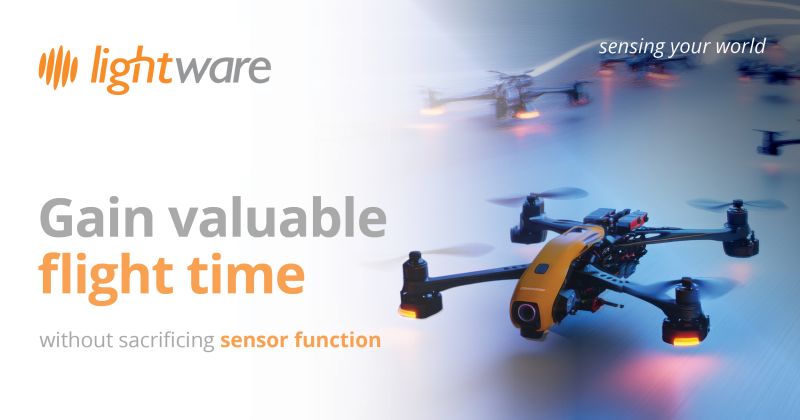
Regardless of your UAV application, payload matters, and counting grams is something all engineers and mission managers do.
It’s worth remembering how the word ‘payload’ came into being. The term combines ‘pay’ and ‘load’, originating in the early 20th century, as logistics companies started adding truck and flight options beyond ship and rail.
For many UAV applications, the payload’s value isn’t a delivery – it’s sensory. Gimbal sensor payload adds features and capabilities that operators need for security, search and rescue (SAR) or wildlife applications. A UAV’s gimbal payload value is measured in the sensor’s features and capability at a given weight.
Compact UAVs are superior for complex low-altitude missions in challenging natural terrain, like hilly areas, ravines and forests, or densely developed urban environments with high structural collision risk. They operate between buildings, securing perimeters navigating tree canopies, avoiding ledges or searching deep into ravines. These are missions where compact UAVs fly more confidently and have less collision risk and limitations than large UAVs.
Vehicle integration is another considerable advantage of using compact UAVs. First responder transport and logistics are much easier when a security, search and rescue (SAR) or wildlife UAV is compact enough to fit in a vehicle.
Amongst first responders is a saying: “the best equipment is what you have with you.” UAVs that can fit in a trunk, loadbed or passenger vehicle cargo area are also usually light enough to be easily handled and launched by one or two people, instead of requiring a team and additional rotor assembly technicians to get it set-up and configured for flight.
Sub 2kg (4.4lb) UAVs and payloads
For all the benefits of portability and flight agility that compact UAVs have, like all UAVs, they are proportionally sensitive to payload mass. Adding components increases their payload weight and erodes flight endurance, but how much does that really matter?
Canadian aerospace research and testing company, Tyto Robotics, has evaluated the influence of payload weight on flight time. The conclusions are notable for operators interested in the performance of compact UAVs under 2kg (4.4lb) in weight. Why? The testing benchmarked a 1.6kg (3.5lb) UAV, which is something in the weight category that agile security, law enforcement, wildlife, and SAR teams could use.
Using the Tyto Robotics’ model, a 1.6kg (3.5lb) UAV has an unladen flight endurance of just under 40 minutes, and the influence of payload is dramatic. Adding just 400g (14oz) of payload reduces the flight time to just over 30 minutes, meaning you sacrifice nearly 10 minutes of operational capability. Larger batteries aren’t the solution, as bigger ones add more weight, compounding the issue.
Engineers and mission managers must balance the needs when operating in demanding conditions with the challenge of sourcing and integrating the best components at the lowest possible weight. Efficiency and lightweighting are both guiding principles and challenges for UAV and gimbal OEMs, when selecting components and calculating weights.
Go lighter – fly longer
Accommodating all the sensors and optics to create true sensor fusion for a UAV in the security, conservation or search and rescue role, requires a diverse selection of components, each complementing each other – but also compounding weight.
If 400g (14oz) of payload reduces a 1.6kg (3.5lb) compact UAV’s flight time by nearly a quarter, it’s obvious how valuable lightweighting the sensor payload is – by even a few grams. Those few grams saved by choosing lighter components can become precious minutes and seconds of flight time, which makes the difference between discovering or missing a person’s location during a search and rescue mission.
LightWare’s LiDAR rangefinder sensors are globally proven and widely used for UAV applications, bringing all the benefits of ultralight design and enhanced flight time to UAV fleets across diverse applications. During demanding law enforcement, security, or search and rescue missions, LightWare’s ultralight LiDAR sensors enhance capability and help keep your UAVs airborne – for longer, by being lighter.
Even a few seconds of flight endurance and hover time can be the difference between identifying, locating or missing a search object or area of interest. Whether your UAV provides security overwatch or is the primary technology driving a time-critical search and rescue operation, you never want to overpromise and underdeliver on operational flight time.
Enter the ultralight laser rangefinder
The challenge for OEMs producing UAVs with gimbal sensor payloads is delivering comprehensive capabilities with the least influence on flight time. LightWare’s product solutions are true to the company name: ultralight sensors, that enables sensor fusion and optimize flight times.
Ultralight sensors from LightWare, like the GRF-250 LiDAR rangefinder, can create a payload that earns its keep by helping keep those UAVs in the air longer.
Developed by LightWare’s dedicated engineering team, the GRF-250 delivers 250m / 820ft laser rangefinding capability for your gimbal payload into your compact UAV fleet – at only 10.65g / 0.376oz.
Engineered for efficiency
Beyond delivering the depth detection and sensor capability users need from a laser rangefinder, the GRF-250 is designed for ease of integration and total power system efficiency.
Some components and technology applications can have a ravenous appetite for precious UAV battery power. Adding battery capacity creates an escalating weight-trap for UAV engineers. It’s not the solution. Choosing sensors designed, tested and proven to be terrifically power efficient is.
GRF-250 is engineered to have amazingly low power demands at only 120 mA, delivering excellent mid-range laser rangefinder performance in demanding conditions without robbing your UAV of valuable onboard power. The result is uncompromised functionality and optimized flight endurance.
When first responders activate in an emergency or provide primary overwatch for an escalating situation, every second of UAV flight endurance matters. By selecting gimbal payload sensors optimized for integration and designed with true lightweight engineering principles, mission managers can gain those valuable flight time seconds that make all the difference in real-world conditions.
Compact UAV flight times are dramatically influenced by weight – and the margins are small. You don’t need to sacrifice capability to save critical weight on your gimbal sensor payload. With GRF-250, LightWare’s created the gimbal integrated mid-range laser rangefinder commercial UAV operators need, saving valuable specification mass that matters when your UAV gets airborne.
Related
Discover more from sUAS News
Subscribe to get the latest posts sent to your email.

GOLETA, Calif.,― Teledyne FLIR, part of Teledyne Technologies Incorporated, today announced the next-
generation embedded software for the ITAR-free Boson+ thermal camera module, delivering high performing uncooled thermal imaging technology for defense, firefighting, automotive, security, and surveillance applications.
Featuring industry-leading thermal sensitivity of ≤20 mK, Boson+ has been upgraded to provide even
sharper thermal imagery and improved spatial filtering. Continuously improved thermal performance and
proven market-leading reliability make Boson+ the low-risk integration choice for unmanned platforms,
security applications, handhelds, wearables, and thermal sights.
“Boson+ shares the industry-leading size, weight, and power (SWaP) of the widely deployed and real-world-proven Boson thermal camera module, simplifying integration and shortening time to market for our customers,” said Dan Walker, vice president, product management, OEM cores, Teledyne FLIR. “With
software updates including new color palettes, low gain mode, and an updated GUI, the AI-ready Boson+
continues to be the go-to thermal module for defense, industrial, and commercial integrators.”
Boson+ interfaces seamlessly with the new Teledyne FLIR AVP, an advanced video processor that powers
PrismTM AI and computational imaging at the edge. The AVP, built on the latest Qualcomm QCS8550,
efficiently runs Teledyne FLIR Prism AI software providing detection, classification, and target tracking. To
improve data fidelity and enhance decision support, it also operates Prism ISP algorithms including super
resolution, image fusion, atmospheric turbulence removal, electronic stabilization, local-contrast enhancement, and noise reduction.
Made in the USA, the 12-micron pixel pitch Boson+ is available in both 320 x 256 and 640 x 512 resolutions.
The noise equivalent differential temperature (NEDT) of 20 mK or less offers significantly enhanced
detection, recognition, and identification (DRI) performance. Improved video latency enhances tracking,
seeker performance, and decision support.
Truly designed for integrators, the Boson+ is available with a variety of lens options, comprehensive product documentation, an easy-to-use SDK, and a user-friendly GUI. Customers have access to the US-based Teledyne FLIR Technical Services team to reduce development risk and cost. Boson+ is dual use (non-ITAR) and is classified under US Department of Commerce jurisdiction as EAR 6A003.b.4.a.
The Teledyne FLIR Boson+ is available for purchase globally from Teledyne FLIR and its authorized dealers.
To learn more, visit www.flir.com/bosonplus
About Teledyne FLIR
Teledyne FLIR, a Teledyne Technologies company, is a world leader in intelligent sensing solutions for
defense and industrial applications, with approximately 4,000 employees worldwide. Founded in 1978, the
company creates advanced technologies to help professionals make better, faster decisions that save lives
and livelihoods. For more information, please visit www.teledyneflir.com or follow @flir.
Teledyne FLIR Media Relations
Discover more from sUAS News – The Business of Drones
Subscribe to get the latest posts sent to your email.

Skyfront, the world’s leader in high endurance hybrid drones, today announced that Skyfront MagniPhy, its next-generation drone magnetometer solution, is available to the market.
The Skyfront MagniPhy is a new enclosure and universal attachment mechanism for drones, which improves data quality, efficiency, and safety. It works with third party magnetometer sensors and a wide variety of drones (including DJI, ArduPilot, and PX4-based drones). Skyfront has advanced this next-generation solution by working with Geometrics, which makes the best-selling MagArrow II UAS-enabled magnetometer.
The Skyfront MagniPhy is now available to existing users of the MagArrow and operators of other drone magnetometers, who can provide Skyfront with their existing magnetometers to be retrofitted with a fast turnaround time. Alternatively, Skyfront can deliver a kit to the operator for seamless self-service retrofitting. Skyfront MagniPhy is also available to new customers interested in finding subterranean objects.
Skyfront MagniPhy delivers significantly improved data quality and enhanced ability to find subterranean objects because its rigid attachment ensures the magnetometer heading remains constant during flight, and its distance from the drone reduces magnetic noise. Its aerodynamic design improves operations in high winds, reducing instrument motion and the resulting noise. It enables faster and more efficient operations because it is easily transportable (it folds from 16.4 feet to 1.4 feet to fit in carry-on luggage), connects to the drone in seconds, and has approximately 8 hours battery life with swappable batteries. It also enables safer operations by reducing the potential to snag trees when flying low to the canopy. The attachment mechanism unfolds when the drone takes off and folds when the drone lands to ensure simple operations.
For surveying large areas with a magnetometer, endurance is crucial. Skyfront also manufactures the highest endurance hybrid gas-electric multicopter drones in the world, with proven flight times over 5 hours, and Skyfront’s system is deployed by customers in over 30 countries on all continents except Antarctica. Skyfront’s customers are rapidly finding abandoned oil and gas wellheads in the United States and detecting landmines and unexploded ordnance (UXO) in Ukraine.
Magnetometer operators and geophysicists no longer need to rely on helicopters (which are less safe and produce an inferior product for a greater cost) or traditional battery powered drones (which only fly for about 30 minutes and create inefficiencies). Skyfront’s solution revolutionizes magnetic surveying capabilities and reduces field time from weeks to days.
“Geometrics has been empowering geoscientists everywhere to explore and quantify the world since 1969, and we are excited by the market opportunity unlocked through our collaboration with Skyfront,” said Dr. Mark Prouty, President of Geometrics.
“Juniper Unmanned helps enterprises unleash the power of remote sensing and analytics, and we are excited to use Skyfront’s next-generation drone magnetometer and our geophysical interpretation techniques to produce accurate maps of buried infrastructure,” said Jeff Cozart, Founder CEO of Juniper Unmanned.
“We are excited to advance the $30B+ defense and geophysical services markets with Skyfront MagniPhy, our next-generation drone magnetometer, which has been integrated into Skyfront’s Perimeter line of drones, the highest endurance hybrid multicopter drones in the world,” said Troy Mestler, CEO of Skyfront.
Skyfront MagniPhy is now available for conducting magnetic surveys, resource exploration, identifying orphan wells, detecting landmines and finding unexploded ordnance (UXO).
About Skyfront:
Skyfront manufactures the highest endurance hybrid-electric multirotor drones in the world, with proven flight times over 5 hours. Customers use the Perimeter 8 for missions worldwide including beyond-visual-line-of-sight operations because of Skyfront’s extremely long flight times, communications range, safety, rapid deployment, and ease of use. For more information, please visit www.skyfront.com
]]>