
Heavy Lift. Extended Range.
When the mission demands greater payload capacity, longer range, and operational flexibility, the Talon DT-300 delivers.
Mountain Horse Solutions is proud to feature the Talon DT-300, a fully electric, multi-role VTOL UAV engineered for logistics, ISR, and autonomous mission support. Designed with a tandem dual-rotor configuration, it combines exceptional lifting capability with the endurance needed for today’s complex operational environments.
Mission Highlights:
• 45 kg (100 lb) maximum payload
• 140 km maximum range
• Up to 2 hours of endurance
• Heavy-lift logistics and resupply
• Mothership capable for deploying launched drones
• Integrated EO/IR imaging
• Blue UAS Cleared for government and defense acquisition
From tactical resupply to persistent ISR and autonomous operations, the Talon DT-300 provides the capability and reliability today’s warfighters demand.
Discover how Mountain Horse Solutions is delivering next-generation unmanned systems to support mission success.
Related
Discover more from sUAS News
Subscribe to get the latest posts sent to your email.

- Heavy-lift uncrewed helicopter demonstrates fully autonomous moving-platform take-off and landings in milestone for maritime and expeditionary operations
- SYOS SA200 UAV, powered by AAIMS autonomy stack, is the culmination of five years of development, offers best cost-to-capability ratio in market
SYOS Aerospace’s SA200 uncrewed autonomous helicopter has successfully completed a series of ‘fully autonomous mission’ trials, clearing the Uncrewed Aerial Vehicle (UAV) for serial production.
The trials proved the heavy-lift aircraft’s ability to execute fully autonomous operations, including take-off and landing, from a moving platform, replicating ship-borne and vehicle-based operations, one of the most technically demanding challenges in autonomous flight.
The accomplishment – the culmination of five-year development programme – is a significant step forward for maritime and expeditionary autonomy and clears the UAV for serial production.
SYOS CEO and founder, Sam Vye, said: “The SA200 UAV has been in development for five years and stands out for its ability to independently complete complex missions without human operation. This is a major milestone for SYOS and testimony to the cutting-edge innovation and determination of our R&D and engineering teams. Our operational testing is some of the most difficult technically we could set. I’m delighted we’re now ready to move into serial production.”
The SA200 UAV uses the SYOS AAIMS autonomy software – an open architecture, platform agnostic, single autonomy management layer for air, land and sea domains. It transforms how missions are planned and executed, delivering confidence, speed, and operational superiority. It reduces operator burden, enables co-ordinated missions and swarming, and maintains navigation when GNSS or communications are challenged.
Designed for rapid deployment, the SA200 UAV modular structure is highly portable and can be assembled or disassembled quickly. It is engineered for use in complex or dangerous environments across defence, commercial and civil sectors where resilience and survivability are key. It can carry payloads of up to 200kg and fly reconnaissance and surveillance missions in contested areas over 180km on 66 litre fuel tanks. This is extendable to 300km, with a 150kg payload.
The SA200 UAV is at the heart of SYOS’s advancement in the UK Ministry of Defence’s Project NYX initiative [1] which aims to accelerate the development of uncrewed systems capable of operating alongside crewed platforms, including Apache attack helicopters.
Developed with resilience and operational capability at its core, the SA200 UAV incorporates anti-jam GNSS, encrypted data links, and a self-healing mesh network to maintain operations in electronically contested conditions. Vision-based navigation enables continued flight in GNSS-denied or degraded environments — a growing requirement in modern conflict zones.
SYOS envisages the SA200 will also be an affordable and safe solution for civilian requirements such as border control, civil defence and search and rescue.
Vye added: “The SA200 UAV programme encapsulates the SYOS approach – novel, ground-up thinking, and rapid development, in close partnership with the people who’ll use it and need to rely on it when it most matters. This approach, plus our focus on designing to minimum viable capability levels, with lean manufacturing, enables us to deliver the SA200 at a highly affordable price point, making it stand out in its field.”
Key Information
- Technology Readiness Level: TRL 7/8
- Payload: 200 kg
- Range: 180km, extendable to 300km with 150kg payload.
- Designed to achieve the lowest cost‑to‑capability ratio in the marketplace
- Mission resilience: Anti-jam GNSS, self-healing mesh network and encrypted data links.
- Operational flexibility: one platform for cargo, ISR and EW missions
- Cost efficiency at cale: the lowest cost-to-capability ratio in the market
- Future proof scalability: serial production ready, with rapid procurement cycles
About SYOS Aerospace
SYOS is a rapidly expanding uncrewed systems technology company that develops and manufactures autonomous vehicles across air, land, sea and underwater domains. The SYOS team comprises industry-leading engineers across multiple disciplines.
Originating in New Zealand, SYOS is now dual headquartered in New Zealand and the United Kingdom, with an established international footprint. The company operates R&D and production facilities in New Zealand and the United Kingdom and maintains an operational and support presence in Ukraine. SYOS is one of the world’s largest manufacturers of Uncrewed Surface Vessels (USV). https://syos-aerospace.com
[1] SYOS is one of initial seven firms chosen by the UK Ministry of Defence to submit proposals for Project NYX ahead of final selection of four partners for the programme, expected in March 2026.
Related
Discover more from sUAS News
Subscribe to get the latest posts sent to your email.

To secure a competitive edge in the increasingly crowded UAV market, HAVELSAN and Alpha Unmanned Systems have signed a memorandum of understanding, combining their expertise in platforms and control systems.
The agreement covers joint software development, integration of command and control (C2) solutions, and participation in demonstrations and tenders. Essentially, it merges HAVELSAN’s strong capabilities in defense software and management architecture with Alpha’s practical rotary-wing UAV platforms.
Alpha Unmanned Systems specializes in light rotary-wing UAVs powered by internal combustion engines — a niche particularly suited for maritime operations and long-endurance ISR missions. For example, the Alpha 900 can stay airborne for up to four hours while carrying up to 4 kg of payload with a maximum takeoff weight of 25 kg. Of particular interest is the Alpha 900T — an aerial target UAV designed to simulate the flight characteristics of attack and multi-role helicopters for air defense testing.
Strategically, this partnership enhances both companies’ export potential: Turkish infrastructure and C2 solutions complement the European platform base. The market is increasingly choosing not just a “drone as a product,” but an ecosystem — platform + management + integration + support.
Alliances like this are shaping the new competitive landscape in the light rotary-wing UAV sector.
Related
Discover more from sUAS News
Subscribe to get the latest posts sent to your email.

The ZIYAN Docking Station is an autonomous operations platform engineered for the ZIYAN F15 UAV. It enables fully automated missions — including precision landing, smart battery charging, data offloading, and operational readiness — while delivering robust logistics and support capabilities for the F15 UAV.
As the home base of the F15, the ZIYAN docking station safeguards every mission through automated maintenance, protection, and intelligence-driven operations — 24/7, fully autonomous, always ready.
Autonomous Unmanned Operations
ZIYAN Dock enables automatic charging, autonomous take-off and landing, and smart operations when used with the F15 UAV, maximizing inspection duration and expanding operational radius.
Unbounded Mission Control
Designed for harsh environments, the docking station provides remote command & control, real-time system monitoring, and secure cloud connectivity, allowing operators to maintain full situational awareness and mission control from anywhere.
Uninterrupted, Long-distance Operations
24/7 unmanned operations in all-weather conditions with scheduled automatic take-off, cruising and landing, effectively addressing inspection needs across various sectors such as oil and gas, border and coastal defense, solar power, maritime and forestry without interruptions.
Technical Parameters
| Dimensions | Stowed: 2700mm*1800mm*1650mm (L*W*H) | |
| Deployed: 2700mm*3880mm*1200mm (L*W*H) | ||
| Helipad Dimensions | 1700*1300mm | |
| Weight | 800kg | |
| Protection Rating | IP55 | |
| Lightning Protection Level | Class B (equipped with lightning rod) | |
| Peak Power | ≤5kW | |
| Standby Power | ≤1.5kW | |
| Operating Temperature | -20° ~ 55°C | |
| Operating Voltage | AC 220V, 50 Hz | |
| UAV Recharging Method | Contact-based automatic charging | |
| Safety Protection | Automatic fire suppression, environmental control, internal/external monitoring |
Related
Discover more from sUAS News
Subscribe to get the latest posts sent to your email.

UAV pilots from QinetiQ Germany recently completed the final module of A900 certification training at the ATLAS Flight Center in Southern Spain. With access to 1,000 km² of segregated airspace, missions focused on long-range BVLOS (Beyond Visual Line of Sight) flights to strengthen their operational expertise with the A900 helicopter UAV system.
Congratulations to the QinetiQ operators on this milestone, we look forward to supporting the team as they move into live operational deployment with the A900.
Related
Discover more from sUAS News
Subscribe to get the latest posts sent to your email.
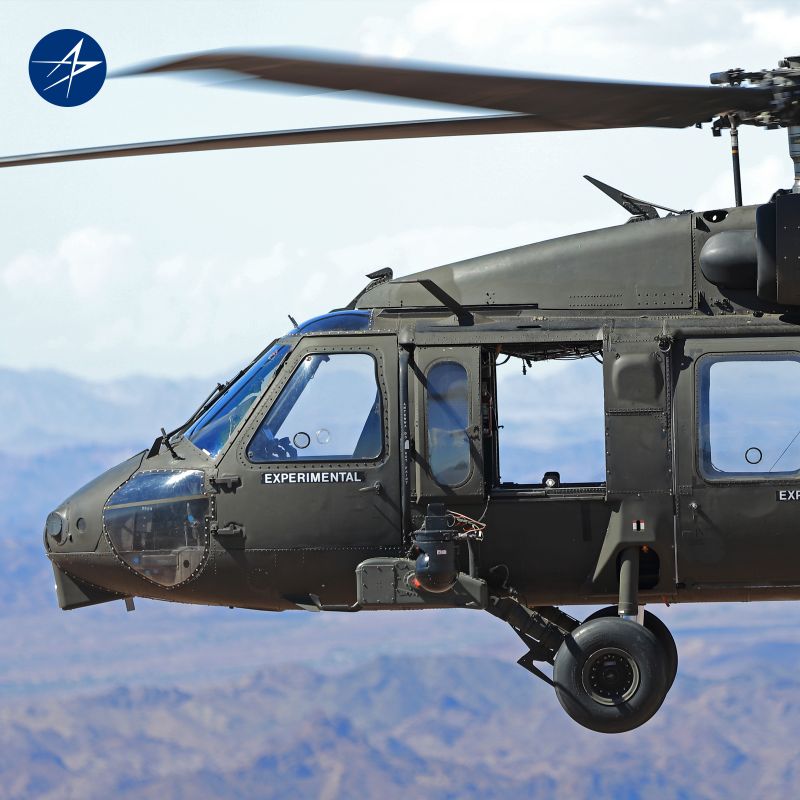
Sikorsky, a Lockheed Martin company, has received a $6 million award from the Defense Advanced Research Projects Agency (DARPA) to install the company’s ALIAS/MATRIX flight autonomy system onto the U.S. Army’s experimental fly-by-wire UH-60M Black Hawk® helicopter. Designated MX, the upgraded aircraft will enable the U.S. Army Combat Capabilities Development Command (DEVCOM) to test and evaluate a wide range of autonomy capabilities, from single pilot operation to fully uninhabited flight.
“Autonomy-enabled aircraft will reduce pilot workload, dramatically improve flight safety, and give battle commanders the flexibility to perform complex missions in contested and congested battlespace, day or night in all weather conditions,” said Rich Benton, Sikorsky vice president and general manager. “Soldiers will rely on Black Hawk helicopters into the 2070s, and modernizing the aircraft today will pay dividends for decades across Army Aviation’s current and future aircraft.”
The MATRIX autonomy system forms the core of DARPA’s ALIAS (Aircrew Labor In-cockpit Automation System) program. As part of ALIAS in 2020, Sikorsky provided the hardware and engineering support to add fly-by-wire flight controls to the MX aircraft. When combined with the MATRIX autonomy system, the MX aircraft will be a near-exact copy of Sikorsky’s UH-60A fly-by-wire Optionally Piloted Black Hawk helicopter, the company’s flying lab that has tested MATRIX autonomy over hundreds of flight hours.
Sikorsky will integrate the MATRIX system into the MX helicopter in 2025. The aircraft will enable DEVCOM to explore and mature the practical applications and potential concept of operations of a scalable autonomy system. Evaluation will include assessment of different sensor suites to perceive and avoid threats, obstacles and terrain, and develop standards and system specifications interfaced with the MATRIX system and a fly-by-wire flight control system.
In July 2024, Sikorsky and DARPA demonstrated to U.S. military service personnel and senior Department of Defense officials how the Optionally Piloted Black Hawk helicopter can easily be flown and controlled by an operator in the cabin, or on the ground by entering high level mission goals via a tablet.
These recent demonstrations built on autonomous flights at Project Convergence 2022, when Sikorsky and DARPA successfully demonstrated to the U.S. Army how the Optionally Piloted Black Hawk helicopter, operating without humans on board, can safely and reliably perform internal and external cargo resupply missions.
Autonomous capabilities such as MATRIX technology are a key part of Lockheed Martin’s 21st Century Security® vision, which includes modernizing the Black Hawk helicopter to stay ahead of new and emerging threats.
For additional information, visit our autonomy website.
About Lockheed Martin
Lockheed Martin is a global defense technology company driving innovation and advancing scientific discovery. Our all-domain mission solutions and 21st Century Security® vision accelerate the delivery of transformative technologies to ensure those we serve always stay ahead of ready. More information at LockheedMartin.com.
Related
Discover more from sUAS News
Subscribe to get the latest posts sent to your email.

In 2017, TILT Autonomy CEO Ryan Beall and I founded and led Rogue Squadron, a drone engineering team embedded within the Defense Innovation Unit (DIU). We were both Active Duty military officers with extensive drone engineering experience, and we arrived at DIU at a pivotal moment. The Islamic State had developed a formidable drone air force over the previous year. China’s DJI had annihilated American drone companies like 3DR and GoPro. The U.S. was losing in a critical technology sector, both on the battlefield and in industry.
Over the next three years, Rogue Squadron became one of the most effective drone engineering teams in the U.S. government. Most of the story remains untold, although Raj Shah and Christopher Kirchhoff’s new book, Unit X, lifts the veil. Early on, Secretary of Defense James Mattis directed DIU to scale Rogue Squadron’s work across the DoD. With backing from the highest levels, we built Rogue Squadron into a powerhouse—part software factory, part center of excellence, and part policy think tank. We became the DoD’s top team for reverse engineering and exploiting DJI drones, built a drone detection network across multiple countries, and supported more than 200 U.S. government organizations with a variety of drone applications. We also provided thought leadership for a new industrial strategy to break DJI’s monopoly and restore a U.S. and allied/partner drone industry. Our work directly shaped the Army’s acquisition strategy for the Army’s Short Range Recon (SRR) drone and evolved into the Blue UAS program.
Perhaps our biggest challenge during these years was the DoD’s talent management system, which could not leave Ryan and I in place long enough to see our work through. Colleagues repeatedly asked us, “Why don’t you start a company?”
Four years later, after stints in industry and academia, we are doing exactly that. We are getting the band back together as TILT Autonomy, a company focused on rapid delivery of cutting-edge autonomy technology to clients.
Although our shift into the private sector will bring changes, our philosophy of technology delivery to the warfighter remains the same.
The TILT Philosophy
By warfighters, for warfighters
This was Rogue Squadron’s motto, and we carry that ethos forward into TILT Autonomy. As experienced military leaders and technologists, we are well-positioned to anticipate new battlefield trends, grasp the reciprocal nature of technology and strategy, and respond quickly to urgent needs. We now bring our decades of experience with operational units, the defense acquisition world, academia, and the drone industry to TILT. Our passion will always be for supporting the warfighter.
One government-industry team
At Rogue Squadron, we built a “startup”-like team that combined serving military officers and contracted software engineers. We worked in one lab as one team. By developing a strong culture and breaking down silos, we could move at breathtaking speed. Our flexible, open-ended contract meant we could pivot as battlefield requirements evolved.
At TILT Autonomy we believe in close partnerships with government clients. We know firsthand the power of high-trust partnerships with visionary uniformed innovators. In addition to my time at DIU, I helped found the Defense Entrepreneurs Forum (DEF) and spent my last year of Active Duty as Deputy Director of Blue Horizons, the Air Force’s flagship program for educating innovation practitioners. TILT is an ideal partner for federal R&D labs, operational warfighting units, the DoD’s “monster garages” like Task Force 99 and Unmanned Surface Vessel Squadron 3, and innovation organizations like the Defense Innovation Unit and AFWERX.
Small, high-performing teams can perform miracles
We believe small teams of passionate, highly-skilled individuals can develop innovative technology at an astonishing pace. Such teams empower smart people to do their best work and have low transaction costs. Our pace of development at Rogue Squadron bore out this thesis.
We are building TILT with this team philosophy in mind. Ryan and I have decades of experience with small drone engineering, and know phenomenal people across the drone industry. Ryan’s stints at companies like Anduril exposed him to incredible talent. We are intentionally and deliberately courting and hiring the best technologists we know.
Optimize for speed
The 2018 National Defense Strategy said, “Success no longer goes to the country that develops a new technology first, but rather to the one that better integrates it and adapts its way of fighting.” It called on the department to prioritize speed of delivery and continuous adaptation. Likewise, in 2018 Dr. Eric Schmidt, Chairman of the Defense Innovation Board, told Congress, “In my view, the Department tends to overestimate the benefits of consensus, stability, and transparency at the expense of speed and agility… If there were one variable to solve for it would be speed.”
Consensus, stability, and transparency are indeed important, and large parts of the DoD have good reason to emphasize those qualities. But DoD also needs front-line technical teams that know how to move fast. TILT Autonomy wants to partner with those teams.
Build things and iterate
The Department of Defense often spends years designing exquisite solutions before deploying new capability. This is especially true when it comes to complex “systems of systems” that require cooperation between numerous stakeholders. We need well-designed architectures and protocols for many systems, but on today’s battlefield, we also need organizations capable of rapidly fielding and iterating on new technology.
A tenet of agile development, and startups in general, is to release early and often. On a battlefield like Ukraine, the distinction between “research and development” and “operations and maintenance” breaks down completely. Much battlefield innovation comes from innovative warfighters using mobile phones, old but proven technologies like ATAK, and cobbled-together networks. Version 0.1 of a capability goes into production immediately, operational experience provides instant feedback, and developers and warfighters—working in close partnership—iterate quickly and often.
At TILT, we are builders. Period. Our bias will always be towards giving our clients something they can see or touch. Prototypes are extremely effective in shaping requirements.
Think about production from the beginning
DoD has distinct organizations for R&D and production. As a result, while the DoD innovation ecosystem produces an incredible amount of novel experimentation, much of this never reaches the battlefield. In fact, much of it is never designed to.
At Rogue Squadron, we repeatedly fielded capability to the battlefield. That gave us a sense for how to think about production and fielding. At TILT, we consider eventual production from the beginning of each new project. Prototyping and experimentation will always be open-ended, exploratory processes, but as much as possible we consider production requirements from the earliest design stages. We are also comfortable walking with clients through the entire lifecycle of projects, from early “divergent thinking” exploration through iteration, refinement, limited-run production, and larger-scale fielding.
Automate and practice continuous delivery
TILT Autonomy embraces best practices for modern software engineering. Rogue Squadron began at the same time as Kessel Run, which helped launch the “software factory” movement within DoD. We were early adopters of the DevSecOps approach, which entails a set of best practices for automation, continuous integration testing, automated vulnerability scanning, and continuous deployment of software. These practices dramatically accelerate speed of delivery while also improving quality and resilience. A philosophy of “automate everything that can be automated” is also imperative for scalability.
Skate where the puck is going
DoD requirements lag behind threats, especially in a time of accelerating technological change. Fortunately, innovative military officers are perfectly aware of this lag and continually bend the DoD’s R&D and acquisition systems to better prepare for the future.
At Rogue Squadron, we called this “skating where the puck is going.” We simulated drone swarm air base attacks two years before Syrian insurgents first employed this tactic in Syria, built remote ID systems for friendly forces well before the FAA-approved system, built “RF dark” drones years before their fielding by the Islamic State, developed DJI security mitigation tools before the vulnerabilities were widely understood, and worked on datalink and GPS/GNSS-denied drone tech well before Ukraine.
We continue to embrace this philosophy at TILT. Because we know the industry well, we track pain points and constantly think about how to operationalize the cutting edge of technology for the warfighter.
Work with us
Delivering cutting-edge technology to the warfighter requires a synergistic relationship between passionate innovators in government and industry. At Rogue Squadron, we wore government hats. At TILT Autonomy, we now wear industry hats.
Our core philosophy remains the same. TILT Autonomy CEO Ryan Beall, the TILT team, and I are passionate about one thing: building and fielding the best possible autonomy technology for our warfighters.
For us, organizations—whether government teams, academic departments, or companies—are merely vehicles for achieving this end. TILT Autonomy will provide a home for our ongoing work of experimentation, invention, and production of cutting-edge drone autonomy. TILT offers a trustworthy partner for innovative government teams, or for other industry partners needing drone engineering talent.
If you would like to partner in our mission, we would love to hear from you. Reach out at [email protected].
By Mark Jacobsen // Director of R&D at TILT Autonomy
Discover more from sUAS News
Subscribe to get the latest posts sent to your email.

Some may jest that helicopters are ungainly and obsolete, but to me, they are a profound passion and a testament to the marvels of engineering. Today, with great excitement, I introduce the Bluefin Tuna, a visionary F3C drone helicopter concept that embodies my lifelong dedication to this extraordinary field.
Helicopters have woven themselves deeply into the fabric of my existence. From years of exhilarating competitions in F3C drone helicopters to graduating with a BSc in Aerospace Engineering a decade ago, followed by countless hours spent immersed in their intricate engineering and hands-on experience, my journey has been one of unwavering devotion.
The unveiling of the Bluefin Tuna represents not just a moment in time, but the culmination of another milestone in fulfilling an old dream nurtured since childhood—to craft my own helicopter. It is a manifestation of the love affair I have with this craft, guiding me through every career choice and milestone.
While I reveal only a glimpse of the Bluefin Tuna’s potential today, which is more of a fun project to me, a personal interpretation of sportive F3C drone helicopters, know that its true essence will be unleashed in the future, protected by patents and IP, awaiting its moment to dazzle the world.
Allow me to address some anticipated inquiries:
1. To those who perceive me solely as a “designer,” I invite you to see beyond the surface. The Bluefin Tuna is a symphony of form and function, drawing inspiration from biomimicry inspired by the hydrodynamic features in the form of the bluefin tuna and the elegance, precision, and details of boutique watches mechanisms and appearance, while maintaining the utmost precision of aero mechanism, optimizing aerodynamics performance and high functional performance for its designated purpose.
2. This futuristic concept targets F3C drone helicopter sport competitions, prioritizing flight endurance and payload considerations unique to this domain.
Some of its key features include a lightweight and rigid main chassis, precise rotor head mechanisms designed and engineered to be fabricated from aerospace-grade materials such as titanium elements (Ti-6Al-4V), AL7075-T651 and a carbon fiber main mast. Additionally, its aerodynamic fuselage is optimized for high controllability and maneuverability in various wind regimes, along with futuristic morphing blades that optimize their form according to specific scenarios. More features will be revealed in the future.
This futuristic concept targets F3C drone helicopter sport competitions, prioritizing flight endurance and payload considerations unique to this domain.
Some of its key features include a lightweight and rigid main chassis, as well as lightweight and precise rotor head mechanisms. These components are designed and engineered using aerospace-grade materials such as titanium elements (Ti-6Al-4V), AL7075-T651 and a carbon fiber main mast. Additionally, it features an aerodynamic fuselage optimized for high controllability and maneuverability in various wind regimes. Furthermore, the concept introduces a futuristic design for morphing blades that optimize their form according to specific scenarios. Stay tuned for more features to be revealed in the future.
3. Helicopters, in all their configurations (from conventional configuration to coaxial, tandem, multirotors, winged, VTOLs, and other variations), offer unparalleled value across various industries. Some of this magic lies in their rotor head mechanisms and its irreplaceable features and merits. Each configuration might be optimized and adaptable to meet specific scenarios.
4. Advancements in electronics, controls, and algorithms enable unprecedented simplification and performance enhancement in helicopter design. This can be exemplified in the transition from flybar to flybarless systems that occurred more than a decade ago. This is just a glimpse of the many opportunities, but we can learn from this specific case how this innovation improved many aspects such as mechanical simplifications by reduced parts, enhanced aerodynamics, reliability, accuracy, and control with electronics assistance.
5. The landscape of helicopter innovation is rich with promise for those with eyes to see and minds to embrace.
I have a lot more to write on helicopters and their potential, but these are the main parts for now. Follow to see more on my future posts or DM for more information on that.
Also, join me on this journey as we unveil the first prototype of the Bluefin Tuna next week, with many more revelations to follow.
With fervent passion,
Aviv
]]>
Overwatch Group, a UK-based end-to-end design and manufacture company specialising in advanced unmanned system and munitions technologies, are launching their unique drone technology into the US market at SOF 2024. At the event, they are showcasing their latest development to potential customers privately. Interested parties can request a meeting via the Overwatch website.
Overwatch is a defence company that manufactures a pioneering coaxial drone and associated payload technology. Their payload agnostic, low weight, high effect drone weapon systems are man-portable providing protection through precision strike, thereby enabling operators to respond at pace to ever-evolving tactical requirements in the battlespace.
Since 2022, the company has delivered around 800 of their unmanned aerial precision strike systems in support of the UK’s contribution to global defence and security. Earlier this year, Overwatch also participated in the US-hosted major army warfighting experiment in California; as part of Project Convergence Capstone 4 (PC-C4). The exercise, with over 600 British Army troops along with thousands from six other nations, was undertaken to bring multinational forces together to establish how to combine situational awareness and command and control.
As part of PC-C4, Overwatch contributed to an integrated reconnaissance and precision strike demonstration at White Sands missile range. This will help commanders make the right decisions and deliver the best effects to win on future battlefields. Overwatch provided the precision strike capability through its loitering munitions which were integrated with higher altitude ISR assets and into the wider C2 system.
All Overwatch design and manufacture is undertaken in-house and provides a full turnkey capability on behalf of the nations it supports. For 2024, Overwatch are focusing heavily on bringing its next-generation coaxial drone systems to global markets, and their solutions are particularly relevant to US military requirements. Producing drones that are agnostic of payload, Overwatch has also been able to develop an array of energetic and non-energetic payloads that provide a wide range of CONOPS; from precision strike to operational support from a common platform.
“We are extremely proud of our veteran ethos of ‘designed by soldiers for soldiers’. Our systems are built with the soldier in mind, to minimise the training burden, and maximise operational flexibility with our approach that enables specific-to-task drone and payload configurations. As our R&D of cutting-edge drone and payload technologies continues to gather pace in line with our growth strategy, we are now well placed to extend our precision strike capabilities to wider markets. We are delighted that US SOF 2024 provides us with this opportunity and we look forward to meeting people at the event”.
Drew Michael, CEO at Overwatch Group
]]>
Robinson Helicopter Company (RHC), a global leader in civilian rotorcraft, has acquired Ascent AeroSystems, now a wholly-owned subsidiary of the Robinson Helicopter Company. This acquisition reinforces Robinson’s dedication to scaling innovation, accelerating new rotorcraft developments, and supporting diverse missions worldwide. By leveraging the expertise and resources of both companies, Robinson reinforces its leadership in the future of vertical flight systems and utility missions.
Ascent AeroSystems, recognized for its efficient and compact coaxial helicopter drones designed for industrial, public safety, and defense applications, brings a wealth of technological synergies that align with Robinson’s strategic vision for growth and expansion into new markets. Through the acquisition, Ascent can now grow and scale by building its UAVs at Robinson’s cost-effective, vertically integrated manufacturing facility in Torrance, CA.
Ascent AeroSystems’ expertise in autonomous electric flight technology and modular design philosophy will enhance Robinson’s offerings. The integration of emerging technologies and a diverse ecosystem of payloads, power sources, and launch methods will further enhance the company’s mission-focused offerings, including crewed-uncrewed teaming and interoperability across product families.
“This strategic acquisition is in line with our vision to broaden our offerings and meet increasing global demand for enhanced mission capabilities in law enforcement, public safety, firefighting, utility, and defense,” said David Smith, president and CEO of Robinson Helicopter Company. “Ascent’s advanced technologies and versatile designs complement our ability to be the preeminent choice in global rotorcraft.”
Ascent AeroSystems’ unique cylindrical, coaxial airframes stand out from competitors in each weight class, offering unparalleled flight performance, payload capacity, and reliability compared to conventional multirotor configurations. Included on the Defense Innovation Unit’s (DIU) Blue UAS Cleared List, the flagship Spirit is a compact, modular, rugged, all-weather platform engineered to operate reliably in the most challenging environments, including high wind, heavy rain, sleet, snow, and blowing sand. The larger NX30 offers more than twice the payload capacity in a heavy lift variant, or it can be configured with additional batteries for flights exceeding an hour.
“Drones based on consumer-grade electronics will never be able to provide the safety and dispatch reliability needed to support operations at scale,” said Peter Fuchs, Ascent AeroSystems’ CEO. “They will ultimately require a type certificate for the aircraft, a production certificate for the factory, an operating certificate for the network, and a maintenance certificate for the repair station. That is the standard that has provided the foundation for civil aviation for the last eight decades. It’s a rigorous process, and there are no shortcuts. The laws of physics and aerodynamics favor coaxials, and with Robinson’s fifty years of experience, there is now no better domestic source for reliable, mission-critical UAV platforms.”
UAS are increasingly integrated into traditional rotorcraft operations in sectors including defense, public safety, agriculture, energy, utilities, construction, logistics, shipping, and surveying. Ascent AeroSystems will maintain its headquarters near Boston.
Ascent AeroSystems will be exhibiting at AUVSI in San Diego in booth #4345, April 23-25, 2024.
About Ascent AeroSystems
Ascent AeroSystems’ compact, all-weather, high-performance, uncrewed aerial systems are designed and built in the USA. Based on patented coaxial technology, they offer unmatched versatility and are the ideal platforms for mission-critical operations and system integrators in public safety, industrial, government, and enterprise applications. For more information, visit https://ascentaerosystems.com/
About Robinson Helicopter Company
For more than 50 years, Robinson Helicopter Company has been at the forefront of the helicopter industry by delivering safety-enhancing technologies, including OEM-designed crash-resistant fuel cells, 4K cockpit video cameras, autopilot systems, and NVG-compatible cockpits. Robinson is committed to developing, manufacturing, and supporting the most reliable and efficient helicopters in the industry. For additional information, visit www.robinsonheli.com
]]>