
Richard Ryan, UK drone lawyer, is calling on the Department for Transport (DfT) to halt the proposed implementation of Remote Identification (RID) regulations for drones. In a letter addressed to the Aviation Directorate, Ryan outlines significant concerns over the policy’s costs, security risks, and lack of a demonstrated safety benefit.
Ryan argues that the current proposal, which would require a wide range of drones—from professional platforms to hobbyist models—to be equipped with costly broadcast modules, is premature and disproportionate. He points to the rollout of a similar system in the United States, citing a U.S. Government Accountability Office report that found law enforcement lacks real-time access to pilot data and the FAA’s infrastructure for data access is incomplete.
- Unjustified Cost: The proposed regulations would impose significant costs on small operators and hobbyists, with compliant modules costing up to £300 per drone. Ryan is requesting a full Impact Assessment from the DfT to include realistic costing and secondary impacts.
- Privacy and Safety Risks: The broadcast nature of the proposed system could reveal a pilot’s location to anyone with a receiver, raising serious risks of harassment and theft. The letter stresses that any UK system must address who can receive this data and whether pilot location should be restricted to authorized authorities.
- Broad Scope: The regulations are set to apply to an extensive range of drones, including those under 250 grams with cameras and legacy models that cannot be economically upgraded. Ryan argues this broad scope is not a risk-based approach and would unduly burden recreational users.
- Lack of Proportionality: The letter suggests a staged, risk-based approach would be more appropriate, initially limiting the requirements to higher-risk operations in the Specific category.
Ryan is requesting that the DfT defer any statutory instrument until the necessary infrastructure and governance are in place. He also asks for a commitment to a public review 12 months post-implementation before any expansion of the regulations.
In order to help this along, Richard has created some helpful templates for drone operators, they are public domain for community use (not legal advice; pilots should personalise and adapt to their circumstances)
Related
Discover more from sUAS News
Subscribe to get the latest posts sent to your email.

Unmanned aircraft operating near active incident scenes pose a growing risk to aerial operations and responder safety. A U.S. fire department based in the Hawaiian Islands encountered repeated drone intrusions during emergency deployments, raising serious concerns for helicopter coordination and overall scene management.
To address this challenge, the department field-tested Dronetag RIDER, a compact, mission-ready Remote ID receiver that provides real-time situational awareness of drone activity. The battery powered device mounts directly to tactical gear or vehicle dashboards and begins scanning immediately, requiring no setup, or external infrastructure.
Case Study Overview:

Key outcomes from the field test include:
- Detection of a DJI M30T drone at a distance of over 2 miles.
- Real-time tracking of multiple drones and pilot takeoff positions while in motion.
- Zero-setup deployment, fully operational out of the box.
- Enhanced airspace control during helicopter-supported emergency operations.
- Positive field evaluation from operational personnel with intent to procure.
“The results have been highly accurate in terms of using the RIDER for detection purposes. I am thoroughly impressed with this technology.” – Field Test Lead, U.S. Fire Department.
The department is now planning to integrate multiple RIDER units into its response operations, citing the device’s ease of use, reliability in the field, and its value in enhancing airspace visibility during critical missions.
Download the full case study here (PDF)
Related
Discover more from sUAS News
Subscribe to get the latest posts sent to your email.

Fishers, IN — Pierce Aerospace, a dual-use aerospace technology firm and global leader in UAS Remote Identification technologies, announced that DIU selected the company’s B1 Remote ID Beacon for the Blue UAS Framework. The B1 will begin the NDAA and cyber security verification process required to join the Blue UAS Framework Authority to Operate (ATO).
“The B1 Remote ID Beacon is the only Remote ID Module selected for the Blue UAS Framework,” said Aaron Pierce, CEO of Pierce Aerospace. “The B1’s selection by DIU is an honor, and we look forward to continuing to support our federal, public safety, and professional commercial customers across the country with the new designation as the only Blue UAS Remote ID Module on the market.”
The B1 Remote ID Beacon has repeatedly demonstrated its status as the top-performing Remote ID module in industry and government-sponsored evaluations. The B1’s high performance is trusted for national security missions and has contributed to recovering UAS airframes and sensors after mishaps. The B1 is regularly utilized by public safety and professional operators, including the film industry. The B1’s design excels at high speeds and with most drones with anti-collision sensors that traditionally present compatibility issues with attached payloads.
“There are numerous use cases for DOD end users to employ the B1 during training and in National Guard missions,” said Pierce. “Blue UAS flown by the DOD don’t always come equipped with Remote ID, which makes training and coordinated flight operations challenging in natural disaster responses. As part of the Blue UAS Framework, the B1 can more easily be acquired to help keep track of drones in training missions and ease coordination in complex airspace for disaster response missions. The B1 allows DOD operators to squawk Remote ID when it matches mission parameters.”
“The B1’s addition to the Blue UAS Framework demonstrates our company’s commitment to creating high-quality products and services for our customers,” said Pierce. “Pierce Aerospace started pioneering Remote ID in 2017. Our commitment and insight ensures that we consistently produce the highest quality Remote ID products on the market.”
The Blue UAS Framework is a list of Interoperable, NDAA-compliant UAS components and software that provide options for Government and industry partners. The Framework provides advanced capabilities to sUAS developers and reduces risk for government customers. It includes critical components, sub-components, modules & software.
DIU selected 23 platforms and 14 unique components for NDAA verification out of 369 proposals from companies in the U.S. and 18 other countries that applied to participate in the refresh challenge.
About Pierce Aerospace
Pierce Aerospace, a Techstars-backed company, is a dual-use IoT and aerospace company and drone Remote ID service provider focused on robust integration of Remote ID services into the UAS ecosystem. As an Industry Leader, Pierce Aerospace serves on the FAA’s Drone Safety Team, ASTM F38 Committee on Unmanned Aircraft Systems, and the FAA Detection and Mitigation Advanced Rulemaking Committee. Funds from the U.S. Air Force and the State of Indiana support Pierce Aerospace’s Remote ID technology, which was nominated as Indiana’s Innovation of the Year by Techpoint and awarded first place in Remote ID technology at AUVSI’s Excellence Awards. Pierce Aerospace was awarded the Techpoint Mira Award as Indiana’s most innovative tech team. The company is headquartered in Indianapolis, Indiana, the racing capital of the world.
Visit www.pierceaerospace.net.
Related
Discover more from sUAS News
Subscribe to get the latest posts sent to your email.

The trkME tracker is a versatile, multi-system tracking device designed to enhance the safety and operational efficiency of UAS. It features a comprehensive range of RF systems, including ADS-B receiver. This ensures robust communication and positioning capabilities, essential for navigating congested airspace. trkME has FLARM IN/OUT transceiver, BLE/Wi-Fi RemoteID transmitter and also has multi-constellation GNSS sensor on board to provide the best accuracy.
The LTE connectivity allows usage in all LTE/4G rich environments without the need for any additional cabling to send data. trkME opens the way to the safe integration of UAS into non-segregated airspace, implementation of the Detect and Avoid algorithms and reduce separation between airspace users. Aerobits trkME is designed to meet requirements of direct remote drone identification and localization in ASTM/ASD-STAN standard.
Using the BLE broadcast and WiFi Nan, Beacon frames technology, the device provides surveillance and drone operator identification capability based on any modern mobile devices such as smartphone or tablet. Our device fits in with the concept of Network Remote Identification and allow broadcast remote drone identification via LTE. It is a perfect solution for conducting VLOS/BVLOS operation where safety is critical.
Note:
The device to operate on FLARM frequency requires FLARM UAS license. The license must be obtained with the device from Aerobits upon purchase.
Related
Discover more from sUAS News
Subscribe to get the latest posts sent to your email.
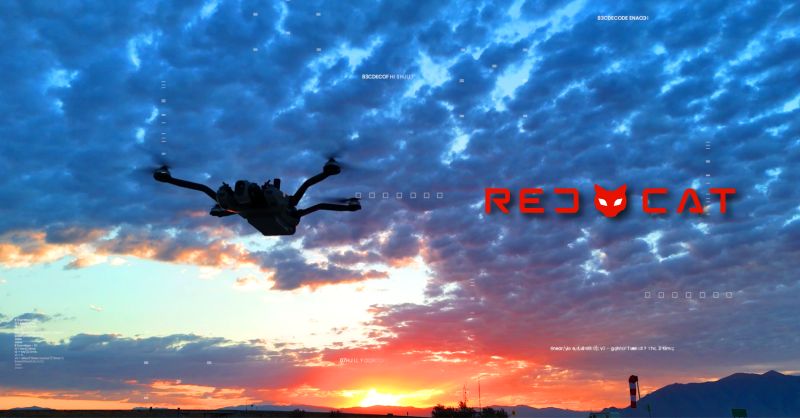
Red Cat Holdings, Inc. (Nasdaq: RCAT), a drone technology company integrating robotic hardware and software for military, government, and commercial operations, today announced it has received authorization from the Federal Aviation Administration (FAA) to operate unmanned aircraft systems (UAS) in U.S. airspace without broadcasting Remote Identification (Remote ID) information, specifically for the purpose of aeronautical research.
“This authorization highlights Red Cat’s commitment as an industry leader to work closely with the FAA on drone requirements and operations in the national airspace system,” said Jeff Thompson, Red Cat CEO. “We are proud to be among the first companies in the United States authorized to conduct research operations without broadcasting Remote ID. This will help accelerate the testing and development of safe and effective drone solutions that support warfighters globally.”
This authorization reinforces Red Cat’s ongoing collaboration with the FAA to shape the future of drone operations in the National Airspace System (NAS). Issued under Title 14 Code of Federal Regulations (14 CFR) § 89.120, the approval allows Red Cat to advance aeronautical research while adhering to strict operational and safety requirements.
Key Highlights of the FAA Authorization
- Purpose-Built for Research: The authorization allows Red Cat to conduct aeronautical research in controlled conditions, exempt from Remote ID broadcasting requirements.
- Strict Safety and Compliance: Red Cat must file Notice to Air Missions (NOTAMs) 24 to 72 hours before operations and adhere to all applicable airspace rules and protocols.
- Long-Term Authorization: Effective immediately, the approval remains valid through January 31, 2028, barring earlier rescission or extension.
Remote ID regulations, often referred to as a “digital license plate” for drones, play a vital role in enhancing safety and security in the NAS. Red Cat’s authorization to operate drones without broadcasting Remote ID will provide valuable data and insights that may inform future FAA policies and the development of drone technologies.
Related
Discover more from sUAS News
Subscribe to get the latest posts sent to your email.

The GS2L and idME PRO Systems for Enhanced UAV Monitoring and Airspace Management
AEROBITS, a technological company specializing in avionics miniaturization, has recently introduced an innovative solution to enhance airspace surveillance and Unmanned Aircraft System integration. It’s DRS-1 – Dual-Band Receiver Station. The DRS-1, officially launched in June 2024, is a high-performance receiver station designed to provide reliable airspace surveillance capabilities. This dual-band receiver station is particularly well-suited for monitoring traffic at airports, air traffic management systems, and local airfields. The DRS-1 represents a significant advancement in Aerobits’ ground infrastructure solutions, which are crucial for the development of UTM and U-Space systems.
There is also another solution – GS2L Ground Station from Aerobits. This versatile device can serve as a powerful Remote ID ground receiver, offering a range of features like:
- ADS-B/FLARM/UAT or RID reception
- PoE power supply
- weather-resistant design
- easy installation and configuration, that make it an essential tool for airspace monitoring and UAV operations
The GS2L receiver station offers various configurations, such as functioning as an ADS-B/FLARM omnidirectional receiver with BLE/Wi-Fi Remote ID receiver capabilities. This allows it to detect and identify different types of aircraft, including drones with Remote ID transmitters. A key feature of the GS2L is its onboard multi-constellation GNSS sensor, providing superior positional accuracy crucial for tracking UAVs in monitored airspace.
Aerobits also offers Remote ID transmitters like the idME series, with the idME PRO being an advanced RID device for UAVs. This device supports dual-technology broadcasting, making it versatile for drone identification and tracking. The idME PRO is FAA and EASA approved, allowing its use in the United States and European Union markets.
Remote ID ground receivers, like the DRS and GS2L, enhance airspace safety by detecting and processing Remote ID signals from UAVs equipped with Aerobits idME series or other modules that use BLE and Wi-Fi technologies. Aerobits has demonstrated the effectiveness of their solutions with range tests, achieving nearly 16 km using the idME PRO transmitter and GS2L ground station, a notable result given the use of Bluetooth and Wi-Fi technology.
The GS2L’s ability to receive and process these signals makes it essential for airspace monitoring and management. Aerobits’ DRS and GS2L solutions represent a significant advancement in ground-based Remote ID receiver technology. By offering subsystems for UAV integration and specializing in air traffic control systems, Aerobits positions itself as a key player in U-Space development. Their solutions, including the DRS-1 and idME PRO, address current UAV autonomy limitations and facilitate the transition to more autonomous operations, providing complete infrastructure for monitoring and managing drone fleets.
The GS2L can function as an ADS-B/FLARM omnidirectional receiver and includes BLE/Wi-Fi Remote ID capabilities, allowing it to detect various aircraft, including drones. It features a multi-constellation GNSS sensor for precise tracking. The idME PRO, an FAA and EASA-approved Remote ID device, offers dual-technology broadcasting for UAV identification and tracking. These systems, crucial for airspace safety, can detect and process Remote ID signals, with AEROBITS reporting impressive range test results. Aerobits’ solutions support the development of U-Space systems and UAV autonomy.
Discover more from sUAS News
Subscribe to get the latest posts sent to your email.
But we found that FAA has few resources to support tribal, state, and local law enforcement in using the technology. Organizations we contacted representing these law enforcement groups told us that they hadn’t received information from FAA on how they could use Remote ID.
We recommended, among other things, that FAA help tribal, state, and local law enforcement understand how to use Remote ID to help with drone investigations.
What GAO Found
The Federal Aviation Administration (FAA) generally requires drones to be equipped with Remote ID technology, which FAA describes as a “digital license plate.” Law enforcement can use Remote ID to identify and investigate unauthorized drone activity, in line with FAA’s goal for Remote ID to help law enforcement. However, GAO found that FAA has limited resources to support tribal, state, and local law enforcement on using the technology. Tribal, state, and local law enforcement agencies GAO contacted had little knowledge of Remote ID or how it could be used in their investigations. Developing such resources could help FAA better support law enforcement’s ability to use Remote ID. Further, FAA is developing an interface to provide drone registration information from Remote ID to law enforcement but does not have a plan or timeline for releasing it. At the same time, the Department of Homeland Security (DHS) is developing an application for law enforcement that would link to FAA’s interface, but DHS similarly does not have a plan or timeline for the effort. As a result, law enforcement may continue to experience delays with accessing real-time information needed to track and investigate unauthorized drone activity.
Examples of Drone Uses within the National Airspace System

FAA officials and stakeholders identified limitations with using current Remote ID technology to enable advanced drone operations, such as traffic management. FAA regulations call for drones to use broadcast-based Remote ID technologies, such as Wi-Fi and Bluetooth to transmit their location. However, commercial drone stakeholders told GAO that a broadcast-based signal is not sufficient for providing real-time, networked data about drone location and status as needed for advanced operations. FAA has stated it expects industry will pursue network technologies for Remote ID, such as cellular, while continuing to transmit the required broadcast-based Remote ID signal. However, stakeholders representing a commercial drone group said that there is a general lack of willingness by industry to develop network-based Remote ID alongside the required broadcast-based approach due to practical limitations, such as signal interference. FAA officials said that in the future, FAA may begin assessing what additional technology can be developed. FAA’s progress toward integrating drones into the national airspace may be at risk if the agency does not assess these issues and identify a path forward.
Why GAO Did This Study
Drones are the fastest-growing segment of aviation in the U.S., according to FAA. Remote ID is intended to help FAA, law enforcement, and others locate drone operators flying in an unsafe manner or where prohibited. FAA is responsible for safely integrating drones into the national airspace and notes that Remote ID could help enable advanced drone operations.
GAO was asked to review issues related to Remote ID. This report assesses (1) potential law enforcement uses for Remote ID, and related federal support, and (2) any limitations FAA and stakeholders may face using Remote ID for advanced operations.
GAO reviewed FAA guidance and resources for Remote ID. GAO also reviewed FAA’s plans for integrating drones into the national airspace. GAO interviewed FAA and DHS officials, and law enforcement and industry stakeholders that GAO identified based on their participation on FAA committees and input from other stakeholders. GAO also reviewed DHS efforts to develop a Remote ID application.
Recommendations
GAO is making three recommendations to FAA and one to DHS, including that FAA develop resources to help tribal, state, and local law enforcement use Remote ID; FAA develop a plan and timeline for a Remote ID interface; FAA identify a path forward for providing real-time, networked data about the location and status of drones; and DHS develop a plan and timeline for its Remote ID application. FAA and DHS concurred with our recommendations.
Recommendations for Executive Action
| Agency Affected | Recommendation | Status |
|---|---|---|
| Federal Aviation Administration | The Administrator of FAA should develop resources to help tribal, state, and local law enforcement use Remote ID. (Recommendation 1) | Open When we confirm what actions the agency has taken in response to this recommendation, we will provide updated information. |
| Federal Aviation Administration | The Administrator of FAA should develop a plan and timeline for deploying FAA’s interface in collaboration with DHS and DOJ. (Recommendation 2) | Open When we confirm what actions the agency has taken in response to this recommendation, we will provide updated information. |
| Department of Homeland Security | The Secretary of Homeland Security should develop a plan and timeline for deploying its Remote ID app in collaboration with FAA and DOJ. (Recommendation 3) | Open When we confirm what actions the agency has taken in response to this recommendation, we will provide updated information. |
| Federal Aviation Administration | The Administrator of FAA should identify a path forward for how to provide real-time, networked data about the location and status of drones. This could include identifying and assessing short-term and long-term options and clarifying roles and responsibilities. (Recommendation 4) | Open When we confirm what actions the agency has taken in response to this recommendation, we will provide updated information. |
Full Report
]]>
RigiTech, a leading Swiss drone technology company, is proud to announce that it has received confirmation from the FAA that the Eiger drone is now registered as a Remote ID compliant UAS, marking a significant milestone in the company’s efforts to operate beyond visual line of sight (BVLOS) in the United States.
Remote ID is a crucial development in aviation technology, providing the capability for drones in flight to offer identification and location information that can be received by others. This system is essential for the safety and security of airspace, allowing organizations such as the FAA, law enforcement, and other federal agencies to locate the control station quickly and efficiently in instances where a drone may be flying unsafely or in restricted areas.
RigiTech’s Eiger drone’s compliance with the standard Remote ID requirements (“ASTM F3411-22a-RID-B compliant”) is not just a compliance achievement; it is a testament to our commitment to advancing drone technology responsibly and safely. The “B” in the official marking signifies Broadcast, indicating that the Eiger drone utilizes a broadcast method to share its remote identification information, a method chosen for its reliability and security.
This approval lays the necessary groundwork for BVLOS operations by meeting one of the FAA’s key safety and security prerequisites. It is a significant step forward in integrating drones into the National Airspace System (NAS) fully, demonstrating RigiTech’s leadership in developing technology that meets the rigorous standards required for safe airspace integration.
https://youtube.com/watch?v=11IE9XQ0bZk%3Fcontrols%3D1%26rel%3D0%26playsinline%3D0%26modestbranding%3D0%26autoplay%3D0%26enablejsapi%3D1%26origin%3Dhttps%253A%252F%252Frigi.tech%26widgetid%3D1
A recent study by SkySafe, a drone tracking and intelligence company, highlighted the challenges in the industry by revealing that a majority of drone manufacturers have not developed their technology in line with established standards. RigiTech’s achievement sets it apart, showcasing our dedication to not only meeting but exceeding regulatory expectations and advancing the drone industry’s capabilities responsibly.
“Achieving this approval is a crucial milestone for RigiTech and the drone community at large, propelling us towards more complex and beneficial drone operations. We are committed to continuing our work with the FAA and other stakeholders to ensure a safe, secure, and innovative future for drone technology,” said David Rovira, Chief Business Officer and co-founder at RigiTech.
RigiTech is excited about the future of drone operations in the United States and globally. With this FAA approval, we are one step closer to realizing our vision of fully integrated, safe, and efficient drone operations that can transform various sectors, from logistics to emergency services.
About RigiTech
RigiTech is a Swiss manufacturer of drone logistics solutions founded in 2018 that focuses on creating fully-integrated drone delivery systems. Its drones are designed with a network-first mentality, the key to scaling drone delivery into a sustainable business model. The centralized RigiCloud software infrastructure ensures reliable, compliant communications, flight tracking and fleet maintenance management. RigiTech’s drone systems have been approved for and flown BVLOS operations on 5 continents, delivering essential goods in their home base in Switzerland, across Europe, Asia, Oceania, North and South America, with a focus on healthcare, offshore and postal markets. (Media contact: marketing@rigi.tech)

Madrid, Spain and Bigfork, MT 14 March 2024 – DataBeacon and uAvionix, announced today, the planned availability of uAvionix’s validated FlightLine ADS-B data from cooperative aircraft as a sensor feed for DataBeacon’s Romeo5 airport and Air Navigation Service Provider (ANSP) Flight Information Display solution. The data provides enhanced situational awareness to air traffic service providers by visualizing the traffic in the airspace they manage mimimising their infrastructure investments. Reliable, trusted and cost effective traffic feeds are a key enabler for airports and ANSP’s wishing to take advantage of new surveillance technologies.
David Perez, CEO of DataBeacon, says, “Safety is our top priority at DataBeacon but this is only achieved if we also balance the importance of cost-effectiveness for our customers. With the collaboration between DataBeacon and uAvionix, we are able to provide reliable and trusted traffic feeds that minimize infrastructure investments for air navigation service providers and airports, allowing them to take full advantage of new surveillance technologies. By leveraging the validated ADS-B data from uAvionix, our solutions offer a unique value proposition that sets our solution apart from traditional legacy technologies.”
The uAvionix FlightLine service provides validated ADS-B track data from a first-of-its-kind high integrity surveillance network of dual-band ADS-B receivers. FlightLine’s truSky validation score provides airports and ANSP’s confidence in the track data for airspace surveillance while the Romeo5 system displays system and connectivity status. The cloud-based system performs at low latencies with redundancy to ensure timely and reliable delivery of ADS-B data from cooperative aircraft. With traceability to certified avionics for ADS-B, the combined Romeo5 and FlightLine surveillance data-as-a-service is a trusted solution for airports and ANSP’s.
The innovative uAvionix truSky validation process inside FlightLine uses the network of multiple low-cost and low-profile deployed dual-frequency (1090MHz and 978MHz) ADS-B ground receivers to evaluate ADS-B signals transmitted from an aircraft. The system then instantly compares the received signals to confirm that the signal originated from the aircraft’s position. When enough sensors are available, truSky uses a number of methods to backwards calculate the aircraft’s position and compares it to the position contained within the ADS-B transmission. Using Doppler information, multilateral timing, and aircraft kinetics, the calculation produces a validation score on each aircraft to provide the confidence and safety margin required for trusted use by airports and ANSP’s operators.
Compliant with UK CAA CAP670 regulation, Romeo5 is a low-complexity Flight Information Display (FID) for aerodromes and airports in the UK. Romeo5 has been built upon the foundation of DataBeacon’s Romeo5 tower and airport solution. The on-premise system is easily deployed on a variety of computer operating systems and offers a cost-effective alternative to a traditional radar and surveillance data processing systems. Utilizing multiple data sources, including ADS-B, Romeo5 delivers a next-generation user-friendly interface providing increased visibility to AFISOs and ATCOs.
Customers wishing to take advantage of DataBeacon Romeo5 with FlightLine validated ADS-B Data should contact David Perez of DataBeacon for further information on the benefits of the combination and how to add FlightLine coverage to their airspace.
About uAvionix
uAvionix was founded with the mission of providing solutions that support the safe and efficient integration of Crewed and Uncrewed Aircraft into National Airspace Systems (NAS). uAvionix is a global leader in the development of proven aviation grade products and services for command, navigation, and surveillance. To learn more about uAvionix crewed and uncrewed products and services, please visit: www.uavionix.com
About DataBeacon
DataBeacon is a leading innovator in air traffic operations, employing a human-centric approach to seamlessly integrate data and machine learning. Our cutting-edge technology is founded on the principles of reliability, scalability, and maintainability, guaranteeing exceptional performance standards. Our forthcoming products will herald a new era in aviation, introducing advanced features and functionalities that will revolutionize the provision of aviation products and services for air navigation service providers and airports.
To learn more about DataBeacon products and services, please visit: www.databeacon.aero.
To know more about Romeo5, please visit www.databeacon.aero/romeo5.
]]>
The FAA’s policy for exercising discretion in determining whether to take enforcement action for drone operators who were not able to comply with the Remote ID Rule ends on March 16, 2024. Operators who do not comply after that date could face fines and suspension or revocation of their drone pilot certificates.
Remote ID applies to drones which are required to be registered or have been registered with the FAA, including those flown for recreation, business, or public safety, and drones that are foreign-registered.
Why is Remote ID necessary?
Remote ID is necessary to ensure the safety and security of the national airspace system by distinguishing compliant airspace users from those potentially posing a safety or security risk. Remote ID also helps to lay the foundation for routine advanced operations such as package delivery and flying beyond visual line of sight.
What do I need to do?
There are three ways to comply with Remote ID:
1. Operate a Standard Remote ID Drone – a drone produced with built-in Remote ID broadcast capabilities; or
2. Operate a Drone with a Remote ID Broadcast Module – a device with Remote ID broadcast capabilities that can be attached to a drone; or
3. Operate at an FAA-Recognized Identification Area (FRIA) – areas where drones without Remote ID broadcast capabilities can operate.
How do I know if my drone or broadcast module is Remote ID compliant?
1. Go to the FAA UAS Declaration of Compliance website
2. Click on “View Public DOC List”
3. Filter by “RID” and “Accepted”
4. Search for your drone or broadcast module
My FAA-registered drone or broadcast module broadcasts Remote ID but is not on the Public DOC List, am I Remote ID compliant?
No, even if advertised as “Remote ID ready” or uses other verbiage, only drones or broadcast modules listed on the FAA DOC are in compliance with the rule.
Do I need to update my drone’s registration with Remote ID information?
If your drone or broadcast module is listed on the public DOC list, you need to register or update your existing drone registration through FAADroneZone to include the standard Remote ID drone or Remote ID broadcast module serial number. The Remote ID serial number is not the same as your drone’s serial number. Drone owners should check with their manufacturer for additional information.
Since recreational pilots only need to register once and can apply that registration number to multiple aircraft, they can list one Remote ID broadcast module serial number and move the broadcast module from drone to drone as long as it is listed on the same registration.
Part 107 pilots need to register each drone individually. Therefore, each drone must have its own Standard Remote ID or Remote ID broadcast module serial number.
Visit our Remote ID webpage to learn more about adding a Remote ID serial number to your drone’s registration.
Have more questions? We’re here to help at the UAS Support Center or call us at 844-FLY-MY-UA (844-359-6982).
]]>