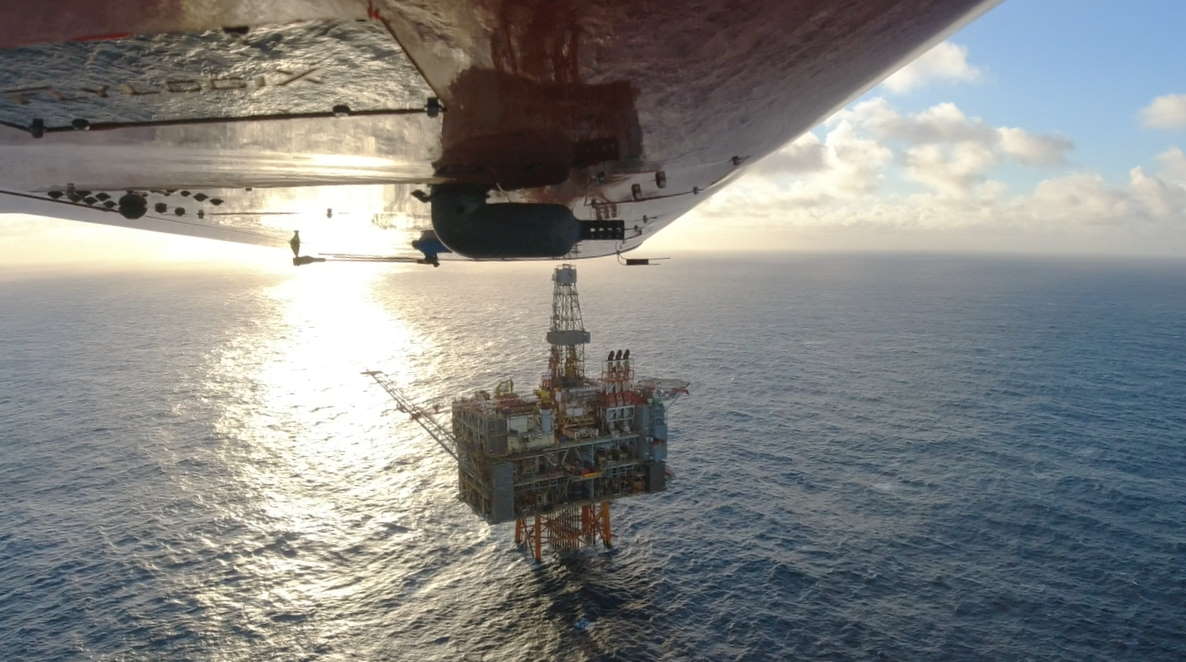
Flylogix’s ground-breaking methane-detecting drone has successfully completed three flights to bp’s Clair Phase One installation in the west of Shetland as part of the energy giant’s commitment to better understand, and respond to, methane emissions offshore.
The pre-programmed craft, once airborne, manages itself autonomously with pilot oversight from shore. During flight, it live-streams data collected by a SeekOps sensor on its wing-tip to the onshore support crew. The sensor technology was originally designed by NASA for the Mars Curiosity Rover.
The latest flights follow successful, similar campaigns by bp and Flylogix in the west of Shetland. In 2019, bp was the first energy company in the North Sea to initiate a project with Flylogix and SeekOps to use a drone to accurately measure methane emissions.
This year, the focus of the flights was to understand how distance from methane sources influences quantification methodology and to demonstrate that readings are consistent through repeated measurements.
During the three flights successfully conducted in November, the Flylogix and SeekOps solution achieved:
● Six hours of flying time
● 380 nautical miles covered
● 216,000 atmospheric methane data points recorded
● 10 methane concentration measurements taken every second
● 54,000 atmospheric methane data points collected at just 250 metres from the platform – the closest a fixed-wing UAV has flown to a bp offshore platform
Flylogix project lead Chris Adams said:
“Measuring the methane emissions of an offshore oil and gas installation is incredibly difficult, but by working with bp, SeekOps and other energy industry partners, Flylogix has been able to prove yet again that we can answer that challenge.
“Our unmanned system combines the range to reach these remote offshore installations with an extremely high level of flight control and accuracy. This means once on station, we can safely collect methane concentration data as close as 250 metres from the installation, whereas previous measurements had been taken at a distance of 500 metres so this is highly significant from a data-gathering point of view.
“This capability is game-changing in meeting the lower levels of detection required for quantifying emissions of low-emitting installations.
“The Flylogix and SeekOps solution also avoids the CO2 emissions – not to mention cost and personnel requirements – that would be generated by traditional methods involving a helicopter flight transporting people and equipment offshore.”
Peter Evans, Environmental Engineering Lead at bp added:
“These Flylogix flights to Clair Phase One are a critical piece of the jigsaw in bp’s methane reduction plans. We are very proud to be an important partner in this work that will ultimately help move the North Sea, bp, and the world toward meeting our climate ambitions.
“Three years on from our first collaboration with Flylogix and SeekOps, the technology is more accurate and robust than ever. Having a real understanding of methane emissions and the confidence that measurements are accurate, is the basis on which we can make targeted interventions to then reduce those emissions.”
SeekOps CEO Iain Cooper said:
“As oil and gas operators increasingly commit to frameworks such as OGMP 2.0, they will need to report not just their bottom-up methane emissions figures, but also their top-down figures. SeekOps
and Flylogix have demonstrated cost-effective, top-down emissions quantification of offshore assets with minimum interruption to day-to-day operations.”.
bp is working hard to reduce methane emissions across its operations and aims to install methane measurement at all of its existing major oil and gas processing sites by 2023, publish the data, and then drive a 50% reduction in methane intensity of operations.
Earlier this month, the company was recognised by the United Nations Environmental Programme for its plans around methane.
About Flylogix
Flylogix is a UK company pioneering new sustainable ways for companies to use unmanned aviation for missions and logistics without hindrance (human, weather, location) and with the least harm to the planet. It’s advanced engineering combines next-generation technology with tough, small unmanned craft that can fly to the most remote locations, up to 500 km beyond the horizon, in some of the world’s harshest weather conditions. Flylogix services are in operation with leading global partners from the oil and gas industries to support them to accurately measure methane emissions and with transport companies such as The Isles of Scilly Group to deliver commercial and time-critical supplies daily.
About SeekOps
SeekOps is based in Austin, Texas and operates globally. It is trusted by top operators in both traditional and renewable energy industries for its accurate sensor technology and actionable reporting. A team of innovative engineers and FAA-certified pilots, they work closely with clients to provide tailored, cost-effective, safe, and efficient emissions monitoring solutions with industry-recognized, unparalleled field services. With customers facing unprecedented challenges in their quest for net zero its groundbreaking SeekIR drone-based solution for emissions detection, localization and quantification offers state-of-the art high accuracy, high-resolution emissions profiles and trends for its customers.
]]>
By Mags Duncan-Duggal
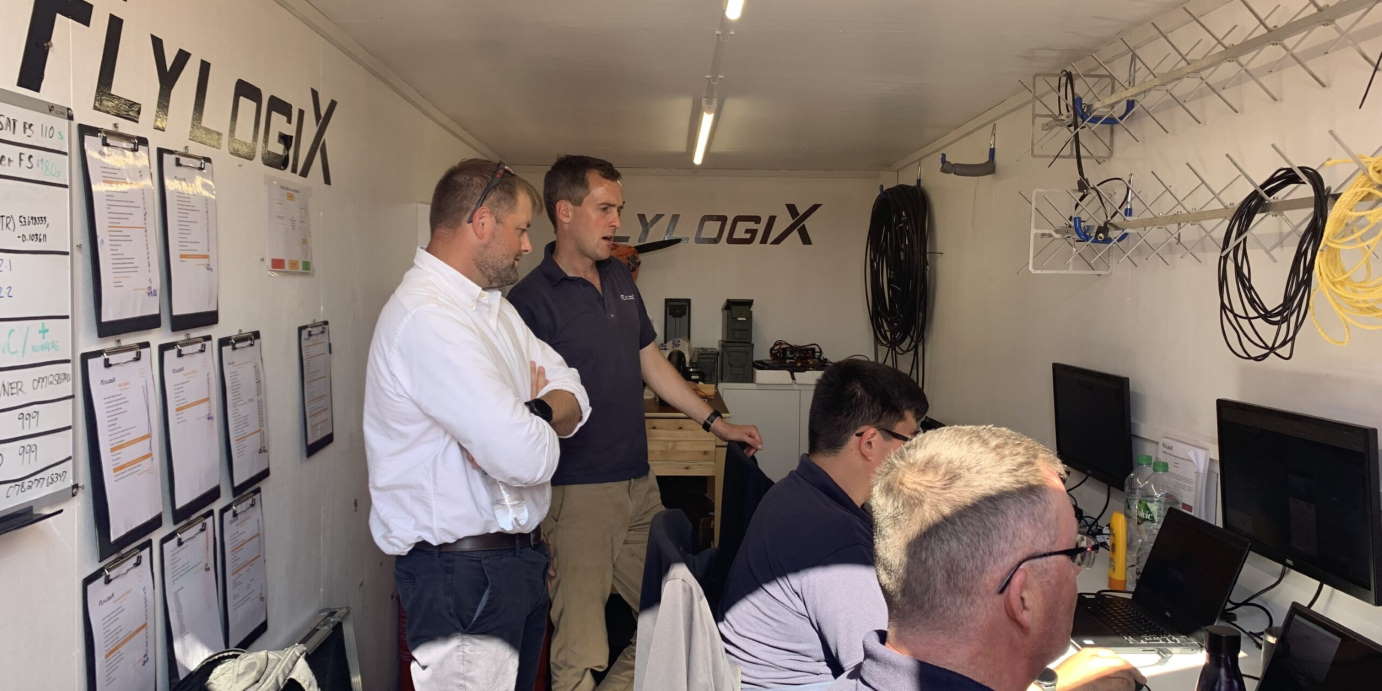
Ed Clay, Flylogix Operations Director, on mission control.
In a remote location on the Norfolk coast, Ed Clay and his team are patiently waiting for the weather to improve. A hallmark of the Flylogix approach is to operate only within strict safety parameters. And it helps when their partners, offshore oil and gas companies, completely understand the temperamental nature of the weather.
As Ed explained from his base near Cromer “Unmanned aviation fits quite well with oil and gas – they understand that everything they do is limited by the weather. The North Sea is pretty hostile. It’s looking pretty hostile out the window at the moment. But oil and gas operators understand that there are operating conditions for a reason, and they’re there for safety, and you stick to them. So we fit together pretty well.”
Flylogix leaves nothing to chance
Safety and careful planning run through Flylogix like a stick of rock. And it’s that same rigorous approach that has enabled them to scale up operations and conduct over 12,500km of unmanned flights in the last year – the equivalent of flying the diameter of the earth.
So how have they made this happen? The team have refined their missions down to a seamless operation, through rigorous testing and planning.
“To get a Flylogix flight off the ground, there’s several elements we have to bring together.” says Ed “Firstly, getting kit and people to the right place. Then making sure we’re operating safely around the customer’s asset. That’s particularly important when we’re flying to an oil and gas asset as there are many variables to take into account. Finally, and vitally, there is ensuring the aviation side of the operation is safe and demonstrating that to others. It sounds complicated but we’re doing this so frequently now that it’s become a very smooth process.”
This smooth process involves getting two key approvals from the Civil Aviation Authority (CAA) for each mission – exemption and airspace. The exemption is to get permission to fly beyond visual line of sight.
“Ordinarily, you can’t just set off with your drone beyond the horizon. So we have to make a case to the CAA. Each case is location and job-specific. But the more of these we do, the more we refine the process, and it’s obviously built on everything we’ve done before.”
The airspace requires a “temporary danger area” agreed with the CAA. This denotes where the UAV will be flying. Operations are considered safe if the aircraft stays within the parameters of the temporary danger area and no-one else comes in. And of course, Flylogix have protocols in place for when that does happen – for example if a search and rescue helicopter needed to enter the airspace.
What it takes to get Flylogix UAVs off the ground
Each Flylogix mission needs a team of two. The UAV is delivered to the airfield in a container and prepared by the onsite team, but much of the operation is organised in advance. And this is the primary reason Flylogix have had so many successful flights. The limitations and parameters of safe flight are carefully calculated by the engineers prior to each mission, so nothing is left to chance.
Ed described his primary considerations when running an operation “We have three main considerations when we’re flying – are we in the temporary danger area? Is there anyone else there? And, is our aircraft performing like it’s supposed to? We monitor and guide the UAV in various ways to keep on top of these. We’re sending out and receiving data constantly, so we always know where the aircraft is, how it’s flying, and information about other aircraft in the vicinity.”
What adventurous stories can Flylogix tell about their missions?
“Engineers don’t do surprises” is how Ed describes the lack of wacky stories about Flylogix’s evolution. The thought and consideration behind each operation minimise all risks in advance. And the team don’t identify with the maverick inventor trope, simply because the risks and parameters of the technology and missions are so carefully calculated beforehand. Any other approach could compromise safety and be very costly.
As he explains “We actually try not to have stories. In the sense that everything we do is very carefully planned and controlled. Very little, if anything, is left to chance. And that might not be the headline-grabbing story of a bunch of maverick engineers, but that’s what’s making us successful.”
Few risks and no surprises. Tested and tough. And that’s why Flylogix always delivers.
]]>
Want to be a part of the next epoch of flight?
Flylogix is growing fast and focussed on taking unmanned aviation further.
We’re seeking experienced pilots with a BMFA B licence and PPL to fly larger drones/models to carry out safe operations for our exacting commercial clients.
Varied Work
With numerous unmanned commercial flights to conduct, you will oversee missions ranging from measuring emissions across the North Sea to delivering parcels to islanders in the Isles of Scilly.
Team Work
You will be part of a pioneering team that bring unique and expert skills from F1 to model makers who can combine and find new ways to progress and deliver industry success. You will be a key part of that. So, your ability to work in and contribute to small teams will be critical.
Tools that Work
Our tested and tough aircraft can fly further achieving 500km out of sight distances. Our sophisticated software is designed to help navigate safely in the harshest conditions to the most remote environments. Our flight processes are producing less CO2 kilo delivered so we don’t cost the Earth. You will be integral to delivering no matter what the hurdles.
Time to Work
To fly our UAV aircraft, you will need to have an eye for detail, protocol and procedure. You will need to be willing to travel across the UK and to work weekends as required. As someone who is client-facing, you will also need to have an assured and personable style.
Qualifictions For Work:
BMFA B licence Experience of flying larger drones/models PPL or similar benefit If you have the skills, attitude and drive to be part of the next chapter in aviation, we’d love to hear from you.Email: [email protected]