The changing landscape of U.S. tech manufacturing spearheaded by the dynamic drone sector reflects a broader push to reduce reliance on Chinese components and bolster national security. Industry stakeholders must stay informed and proactive in navigating these evolving regulatory environments.
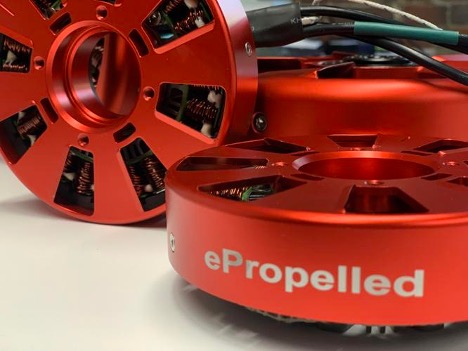
The U.S. Department of Treasury’s Office of Foreign Assets Control (OFAC) has recently sanctioned Jiangzi Xintuo Enterprise Co. Ltd, also known as T-Motor, a major global supplier of rotor components used in unmanned aerial systems (UAS). This follows the Department of Commerce’s 2024 decision to place T-Motor on the Bureau of Industry and Security’s Entity List due to its support of foreign military capabilities. These actions highlight growing concerns about supply chain security and national security objectives in the U.S.
While motors are not currently covered under National Defense Authorization Act (NDAA) restrictions, as trade organization AUVSI points out in a policy blog, ‘T-Motor Sanctions: AUVSI’s Analysis and Recommendations’ U.S. companies must be aware that non-defense government actions, like OFAC sanctions and the Commerce Department Entity List, pose significant compliance risks for continued reliance on these components. Industry leaders are working to identify and transition to alternative suppliers, though challenges in availability, cost, and performance remain.
Made in the USA
The drive to find alternatives to Chinese-made unmanned aerial vehicles (UAVs) and components is gaining momentum. Legislative measures and lists of approved vendors, such as the US Defense Innovation Unit’s (DIU) Blue UAS Cleared List, are steering buyers away from vendors like DJI and T-Motor. For example, North Dakota’s state government, supported by the governor, is proposing a $15 million investment to replace Chinese drones used by state agencies.
Florida’s state government also requires its agencies to purchase drones from an approved list based on recommendations from the Department of Management Services. This trend is not confined to the U.S.; Ukraine’s Ministry of Strategic Industries recently showcased its domestic UAV manufacturers to promote non-Chinese vendors.
Both public and private sectors are working to find alternatives to Chinese drone vendors and component suppliers. Trade and lobby groups such as AUVSI, the United States National Drone Association and National Drone Association of America (NDAOA) are marshalling the voice of users, operators and supply chains, as manufacturers in China have begun limiting or stopping deliveries of essential UAV components to the U.S. and Europe.
Public safety
Meanwhile, the environment and technologies employed to support public safety in the United States are undergoing a transformative shift, driven by advancements in and the adoption of drone technology. This evolution is set against a backdrop of increased demands for de-escalation, enhanced situational awareness, and more efficient resource allocation amidst public safety staffing shortages and challenges, as reported by law enforcement news portal Police 1.
Types of Drones Used in Public Safety
Public safety agencies utilize different types of drones based on their specific needs. Here are the primary categories:
- Fixed-Wing Drones – These drones are designed for long-range surveillance, mapping, and large-area search and rescue operations. They provide extended flight times and are used for disaster response and border security.
- Multi-Rotor Drones – These are the most commonly used drones in public safety, offering agility, ease of use, and the ability to hover. They are widely employed by law enforcement, fire departments, and emergency response teams.
- Hybrid VTOL (Vertical Take-Off and Landing) Drones – These drones combine the benefits of fixed-wing and multi-rotor designs, making them suitable for extended missions requiring both endurance and maneuverability.
Key Applications of Drones in Public Safety
Law Enforcement
- Surveillance and Reconnaissance: Drones assist in monitoring criminal activity, gathering intelligence, and providing real-time data.
- Crowd Control and Event Security: Law enforcement uses drones to oversee large public gatherings, protests, and sporting events.
- Tactical Support: SWAT teams deploy drones for situational awareness before entering potentially dangerous situations.
Firefighting
- Wildfire Management: Drones equipped with thermal imaging cameras help locate hotspots and track the spread of wildfires.
- Structural Fire Assessment: Firefighters use drones to assess burning buildings and determine safe entry points.
Search and Rescue (SAR)
- Disaster Response: After natural disasters, drones help locate survivors and assess damage.
- Missing Persons Search: Equipped with infrared cameras, drones assist SAR teams in locating lost individuals in difficult terrains or low-visibility conditions.
Emergency Medical Services (EMS)
- Medical Supply Delivery: Some agencies are testing drone delivery of defibrillators, first aid kits, and other emergency supplies.
- Accident Scene Analysis: Drones provide aerial views of accident sites, helping EMS teams coordinate their response.
At the forefront of this evolution are American drone manufacturers like BRINC Drones (Washington), Flock Safety (Atlanta) , which recently acquired Aerodome (California), Skydio (California) Impossible Aerospace (California) and AeroVironment (Virginia), TeledyneFlir (Oregon) and Parrot Anafi USA (Massachusetts ). These companies are innovating and are positioned to lead the market as competition intensifies, particularly in light of a potential ban on Chinese-made drones, such as those produced by DJI. The potential banning of DJI drones, due to security concerns and increasing scrutiny of Chinese technology, may create a unique opportunity for American manufacturers to dominate the U.S. market. However, many public safety agencies currently consider DJI drones to be more capable and significantly cheaper than their domestic counterparts. With DJI’s significant penetration in public safety agencies, a vacuum created by its potential absence will spark an arms race among U.S.-based companies to develop superior products tailored for public safety use.
This competition is expected to drive rapid innovation, improve product quality, and potentially lower costs, making advanced drone technology more accessible to police departments, fire departments, and other governmental agencies nationwide. As these manufacturers vie for market share, the ultimate winners will be public safety agencies and the communities they serve.
Home-grown supply chain
In this fast-moving space, AUVSI encourages members to assess their supply chain exposure and consider alternative sourcing strategies. In active conversations with the Department of Defense, Department of Commerce, and Capitol Hill, AUVSI is exploring efforts, including invoking the Defense Production Act, to provide financial assistance to U.S. companies for building, expanding, or modernizing production facilities.
These measures aim to support domestic supply chains for critical technologies that are challenging to source outside of China.
Related
Discover more from sUAS News
Subscribe to get the latest posts sent to your email.