
The continent of Australia presents a unique logistical challenge, particularly across its vast, remote and strategically vital northern regions. For the Australian Defence Force (ADF), maintaining a continuous operational presence across such an expansive and unforgiving landscape demands highly innovative approaches to supply and support. Traditional methods of moving cargo are often stretched to their limits by the sheer scale of the geography.
Enter Project Jericho, the Royal Australian Air Force’s disruptive experimentation programme, which is pioneering the use of autonomous aerial logistics to build what military strategists term fighting depth. Central to this ambitious vision is the JabX, an uncrewed aerial system (UAS) based on the proven Jabiru 400 airframe, designed to transport heavy cargo over long distances. By automating routine cargo movements, the ADF aims to revolutionise its logistics tail, ensuring that dispersed teams remain supported without over-tasking the crewed transport fleet.
To understand the true significance of the JabX and the broader Jericho initiatives, one must consider the geographic and strategic realities of Australia. The north of the country is characterised by immense distances, sparse populations and challenging environmental conditions. Operating in this environment requires a robust and agile logistics network capable of connecting remote airbases, coastal areas and dispersed teams conducting littoral operations.
Traditional crewed aircraft are highly capable, but using them for routine supply runs across such vast distances is an inefficient use of valuable resources and personnel. The air force’s Jericho Disruptive Innovation (JDI) team is directly addressing these challenges. By focusing on autonomous aerial logistics, JDI is attempting to build fighting depth for the air force.
This concept involves creating layers of capability and resilience, ensuring that frontline forces have the continuous, uninterrupted support they need to sustain operations. When routine logistics are handled by autonomous systems, human aviators and crewed platforms are freed up to concentrate on complex decision-making, mission command and tasks that only people can perform, particularly in demanding or contested environments. As the deputy director of disruptive experimentation, Wing Commander Keirin Joyce, noted, these technologies are vital to ensuring the air force is ready for future challenges. He said: “By taking on routine logistics missions, autonomous aircraft will free up our aviators and crewed platforms for the tasks only people can do – particularly in demanding or contested conditions”.
The practical manifestation of this autonomous logistics vision is Project Camel Train, an initiative focused on prototyping and deploying UAS corridors across northern Australia. These dedicated flight corridors are intended to link remote airfields and coastal bases into a seamless, precision delivery network. The primary workhorse chosen for this ambitious undertaking is the JabX. Developed in collaboration with RFDesign, an avionics company based in Brisbane, the JabX is a heavily modified version of the popular Jabiru 400 airframe. The Jabiru 400 is already well regarded in light aviation circles, and adapting it for autonomous flight represents a pragmatic and highly efficient approach to capability development. The JabX is specifically designed for long-haul flights carrying heavy loads, featuring robust avionics, structured pre-flight and in-flight workflows, and an advanced graphical user interface that allows operators to maintain constant mission oversight.
The development process for the JabX highlights the immense benefits of using an existing, proven airframe rather than building a new design from the ground up. The director of Jabiru, Michael Halloran, explained that turning the J400 into an optionally crewed aircraft removes the vast time and resources typically required to develop a completely new platform. This approach drastically accelerates the development of autonomy systems because a safety pilot can be kept on board during the initial phases of test flying. Once the autonomous systems are fully developed, tested and proven, transitioning to a dedicated autonomous logistics platform is relatively straightforward. The final autonomous version will share 80% commonality with the crewed JU30 aircraft, meaning that production can be easily scaled up using existing commercial production lines and supply chains.
Integrating autonomous aircraft into shared airspace is not simply a technological challenge; it is a profound regulatory and safety hurdle. The Jericho team recognises that for autonomous logistics to become a reality, these robotic aircraft must navigate crowded or contested skies as safely as human pilots do. Every single component and system of the JabX is tested step by step as part of a strictly regulated pathway. This rigorous testing begins with human pilots operating in controlled settings. As the technology is proven and the regulatory framework permits, the aircraft gradually transition to higher levels of autonomy. The process is described as careful and transparent, keeping safety at the absolute centre of the programme while still enabling rapid innovation. This step-by-step methodology ensures that the ADF can build fundamental trust in the systems before deploying them for live operations across the vast northern corridors.
A critical enabler for long-range autonomous cargo operations is the ability of the uncrewed aerial vehicle (UAV) to safely separate itself from other aircraft sharing the airspace. To solve this complex problem, the Jericho team established Project Arena, a companion initiative to Project Camel Train
Related
Discover more from sUAS News
Subscribe to get the latest posts sent to your email.

Sydney, Australia – Sphere has been approved by the Civil Aviation Safety Authority (CASA) under the Broad Area BVLOS Self-Assessment framework, marking a major milestone for Australia’s drone industry and reinforcing Sphere’s position as a leader in scalable, real-world BVLOS operations.
The approval allows Sphere to self-assess areas to conduct operations beyond visual line of sight (BVLOS), enabling faster, more flexible, and scalable drone operations across sectors such as mining, utilities, and infrastructure. It reinforces Sphere’s leadership in developing and deploying the systems, processes, and technology that make BVLOS operations practical, safe, and accessible for enterprise use.
At the core of this capability is HubX and HubT, Sphere’s remote operations system that integrates connectivity, power, and control into a deployable platform purpose-built for BVLOS missions. HubX and HubT enables live command and telemetry from the field to the Remote Operations Centre, making true remote drone operations possible at scale.
Elliot Cummins, Chief Remote Pilot at Sphere, highlighted the approval reflects years of work in safety, compliance, and operational excellence.
“This approval is a watershed moment for our business, our clients, and the industry as a whole. It means we’ve built the systems, processes, and mindset to operate beyond traditional limits, so our clients and the industry can deploy with confidence, scale faster, and capture value in places they simply couldn’t before.”
CASA’s Broad Area BVLOS Self-Assessment framework introduces a performance-based model that allows qualified operators to self-assess risk and streamline approvals. With only a handful of approvals granted nationwide, Sphere is helping define the next phase of safe, scalable BVLOS operations in Australia.
Paris Cockinos, CEO of Sphere and recently recognised by The Daily Telegraph as one of Australia’s Top 250 Young Entrepreneurs, said the approval is the culmination of years of innovation and investment in building Australia’s most capable BVLOS ecosystem.
“This approval is a reflection of the years of investment, innovation, and collaboration that have gone into building Australia’s most capable BVLOS ecosystem. It’s not just about flying further; it’s about enabling businesses to operate smarter, safer, and with greater confidence in what’s possible. BVLOS is the future of enterprise drone operations, and we’re proud to be leading that transition right now.”
Cockinos’ recognition among Australia’s top entrepreneurs highlights the momentum behind Sphere’s growth, driven by a focus on local manufacturing, rapid deployment, and practical innovation that underpin its BVLOS capability.
What truly sets Sphere apart is its ability to manufacture, integrate, and deploy rapidly. Sphere can not only guide businesses through CASA’s approval process but, through Sidero Local, also deliver fully operational BVLOS systems on-site within a week. This approval underscores that speed, proving that Sphere can take a client from regulatory readiness to live BVLOS operations faster than anyone else in the market. This end-to-end capability minimises downtime, accelerates deployment, and ensures clients can start real-world missions with full confidence and compliance.
To support organisations preparing for BVLOS operations, Sphere has developed the Broad Area BVLOS CASA Trial Guide, the only comprehensive resource of its kind in Australia and the most efficient way for businesses to understand and navigate CASA’s new framework. The guide outlines the process, key risks, and practical lessons learned from Sphere’s real-world experience.
Beyond regulatory readiness, Sphere’s Flight Operations team delivers full-service BVLOS mission support, from planning and deployment to aerial data capture, processing, and delivery. This combination of compliance expertise, rapid manufacturing, and operational execution ensures clients can move seamlessly from approval to on-site operations.
“CASA’s new self-assessment framework marks the beginning of a new era for Australian drone operations,” said Paris Cockinos, CEO of Sphere. “With our approval secured and systems proven in the field, we’re ready to help organisations fly further, faster, and smarter.”
About us:
About Sphere | Data + Drones
Sphere is a leading full-stack technology and services provider with offices across Australia. We empower businesses, enterprises and governments to effectively respond to challenges, risks and opportunities with innovative drone solutions.
Our cutting-edge drone solutions, capabilities and experienced team propel businesses beyond the horizon, to the skies that have no limits.
Since 2014, we’ve supported over 13,000 businesses, enterprises and government departments with hardware, software, services, operational and compliance support. We take pride in the relationships we have built and continue to maintain, including Rio Tinto, Fortescue, BHP, Ausgrid, Sydney Water, Water Corp, South32, Fyfe, Surf Life Saving NSW, Sydney University, James Cook University, and more.
Related
Discover more from sUAS News
Subscribe to get the latest posts sent to your email.
The Australian Association for Uncrewed Systems (AAUS) and the Australian Certified UAV Operators (ACUO) have today announced an exciting new chapter for the uncrewed systems industry in Australia, uniting under a single banner to better represent and advocate for the sector. Effective immediately, AAUS will serve as the peak body for the uncrewed systems industry, while ACUO, after years of valuable contributions, will formally cease operations.
This unification signifies a strengthened and single voice for the Australian uncrewed systems industry, bringing together the collective expertise, advocacy, and resources of both organisations. AAUS, as the recognised leader in the sector, will continue to drive policy, innovation, and industry development, while preserving the legacy and contributions of ACUO.
“We are proud to announce this new phase for Australia’s uncrewed systems industry,” said Reece Clothier, President of AAUS. “By uniting with ACUO, we are creating a stronger, more cohesive body that will be better positioned to champion the interests of our members and drive forward the growth of this dynamic industry.”
Founded in 2009, ACUO has been instrumental in the development of Australia’s UAV operations, setting standards and advocating for the safe and responsible use of UAVs across various sectors. ACUO’s legacy is one of pioneering professionalism and shaping the early stages of the industry’s regulation and acceptance within Australia.
“We pay tribute to ACUO and its members for their tireless work in advocating for operators and the industry as a whole,” continued Dr Clothier. “Their legacy will live on through the ongoing work of AAUS, and we are committed to continuing the tradition of excellence they have established.”
Brad Mason, one of the seven founding members of ACUO, said, “We are all quietly proud of the foundations we laid. I want to personally thank all the ACUO management committee members over the years who volunteered their time for us and the development of our industry.”
“The Australian RPAS industry is incredibly innovative and the pace of development such that our consolidation is a logical next step to industry growth. I’m pleased to see the two organisations finally unite and I’m keen to see now what we can achieve together.”
As part of the unification, two of ACUO’s current committee members Aaron McKay and Danny Elassad will join AAUS. Aaron, Managing Director and Owner of Aus Aerial Media will take a vacant seat on the AAUS Board and commented that “I’m proud to be able to continue to represent ACUO’s voice on the board of AAUS as the two associations unite. I feel that this union can only strengthen the Australian uncrewed systems industry.” Both Aaron and Danny will also be part of AAUS’ RPAS Advisory Group bringing valuable SME input to AAUS’ advocacy efforts.
Moving forward, AAUS will continue to offer a broad range of support, networking, and advocacy services to members from across the broad uncrewed systems industry. This unification reinforces AAUS’s commitment to building a robust, forward-looking industry that contributes to Australia’s technological leadership on the global stage.
About AAUS
Founded in 2009, the Association for Uncrewed Systems is Australia’s oldest and largest industry advocacy group for the Drone and Advanced Air Mobility (AAM sector).
AAUS is a not-for-profit organisation which represents the drone and AAM industry across three domains: land, sea, and air. AAUS’ objective is to promote a professional, safe and commercially viable uncrewed systems and AAM industry. AAUS achieves this through its industry advocacy and promotion, education and outreach, and networking activities.
AAUS provides a single representative voice for the full breadth of the drone and urban AAM industry. AAUS’ 4,500 members spans small-to-large enterprise, manufacturers, licensed and unlicensed operators, training providers, academic institutions, Government, and other supporting technical and professional services in the Australian drone and AAM industry.
About ACUO (Former)
Founded in 2009, the Australian Certified UAV Operators (ACUO) was a pioneering organisation committed to supporting safe, ethical, and professional UAV operations in Australia. The seven founding members of ACUO were Sean Pearce-Air Affairs; Matt Tubb-Airship Solutions; Paul Martin-APS; Stewart Topping-Equinox Air; Brad Mason-HELImetrex; Joe Urli-UAV Systems; Peter Hill (Dec)-VTOL Aerospace.
Throughout its history, ACUO played a key role in shaping the regulatory framework for UAVs and elevating the standards for certified operators across the country.
Related
Discover more from sUAS News
Subscribe to get the latest posts sent to your email.
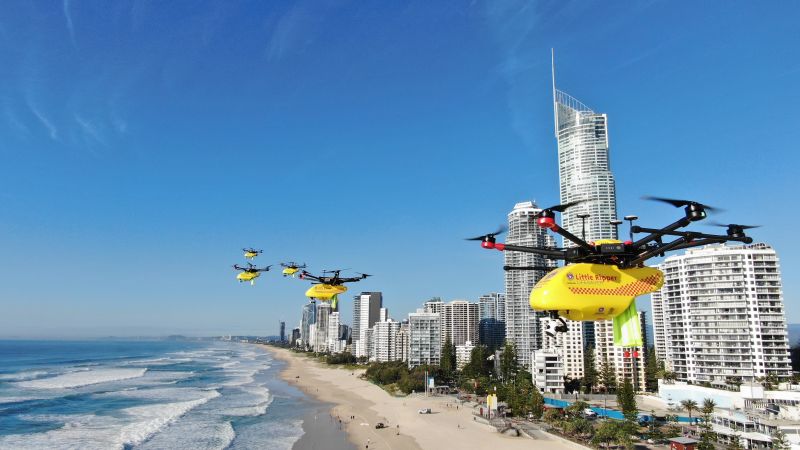
Sky-Ops are showcasing the Little Ripper Lifesaver Drone as part of their Future Pilots Development Program in both primary and secondary schools. The Little Ripper Lifesaver Drone performed the world’s first ocean rescue carried out by a drone, which saved the lives of 2 teenagers at Lennox Heads in NSW in 2018.
To book Sky-Ops to come to your school, please email: [email protected]
Sky-Ops would like to sincerely thank the Civil Aviation Safety Authority for providing the “Know Your Drone” learning materials
Discover more from sUAS News
Subscribe to get the latest posts sent to your email.

Analysis commissioned by Airservices Australia predicts the annual number of drone flights in Australian skies will surge from 1.5 million a year in 2023 to 60.4 million a year by 2043.
The report, Sizing the future drone and advanced air mobility market in Australia, was produced for Airservices to inform the ongoing discussion on how Australia can best prepare for and benefit from the increasing availability of drone technology.
The exponential growth in drone traffic is expected to be driven by increasing demand from the transport and logistics sector, which is forecast to make up 77 per cent of the increase in drone traffic. The report also predicts that by 2043 Australian farmers will be making 500,000 drone flights annually to monitor crops, while drones will make 1.5 million food deliveries to Australian households.
Emergency services are also forecast to make increasing use of drone technology. More than 300,000 flights will be made annually to support frontline police and 80,000 flights in support of surf lifesavers, while 100,000 patients will be transported to hospital by a specialised new air ambulances, like the hydrogen-powered aircraft ‘Vertiia’ manufactured by Australian aerospace company AMSL Aero.
Drones are already employed widely in Australian agriculture and mining operations, where they are used for operational monitoring, surveying and mapping. Several new market entrants are also delivering food and goods by drone, with more than 120,000 trips per year taking place already.
Electric air taxis are expected to make nearly 1 million flights in 2043, with providers targeting Australian launches to coincide with the 2032 Olympic and Paralympic Games in Brisbane.
Responsible for the safe and efficient use of Australian airspace, Airservices commissioned the scoping report to inform its future planning for uncrewed aircraft traffic management—a growing part of the aviation industry.
The report notes there is broad agreement among industry stakeholders that achieving and managing the increase in drone traffic will require an appropriate and responsive regulatory framework, and a willingness to work collaboratively to enable the safe and sustainable growth of uncrewed aviation.
“Airservices is building the technology foundations to support increasing drone and air taxi use in Australia, and key to that is collaboration between all stakeholders,” said Jason Harfield, Airservices Australia Chief Executive Officer.
“Airservices’ no.1 priority is safety, and we look forward to working with industry, government and community to chart a course for next-generation technology in Australian skies.”
Luke Gumley, Airservices’ Head of Transformation Uncrewed Services, said: “Airservices is partnering with industry to deliver the backbone to a world-leading air traffic management system for drones which will support the safe and efficient integration of all aircraft including drones and air taxis into Australia’s increasingly busy airspace.
“The Flight Information Management System is being built using innovative digital and automated technologies, cyber resilience, and privacy as core foundations.
“To ensure open and transparent industry engagement, Airservices has drawn together key industry stakeholders to form the Uncrewed Services Advisory Network to enable us to better connect directly with drone and air taxi operators, and the wider aviation industry.”
Airservices is an integral part of the whole-of-government approach to the safe management of drones and air taxis, with emerging aviation technologies expected to be central to the Aviation White Paper scheduled for release later this year.
About Airservices
Airservices Australia is Federal Government-owned organisation responsible for the safety of 11 per cent of the world’s airspace and the provision of aviation rescue fire fighting services at Australia’s busiest airports. We work closely with our customers and industry to support the long-term growth of the aviation industry and are investing in technologies to position Australia at the forefront of innovation in the global aviation industry.
]]>

Percepto, pioneering autonomous inspection by industrial robotics, today announced that it has been granted operational approval to fly Percepto autonomous drones beyond visual line of sight (BVLOS) at a site in Australia. The waiver, granted by the Civil Aviation Safety Authority (CASA), will allow completely remote inspection of the facility, laying the groundwork for many similar waivers for Percepto customers nationally.
The achievement significantly adds value in the Australian market where many facilities are in remote locations. As a result, companies are increasingly introducing remote operations to manage, monitor and secure their sites. The approval will also enable high risk sites such as mines and refineries to better manage safety and environmental risks, while increasing productivity and reducing downtime.
The most widely deployed drone-in-a-box on the market, Percepto has an industry leading track record of regulatory firsts at their Fortune 500 companies globally. The company was recently invited to join the FAA BVLOS Aviation Rulemaking Committee and has been included among the first group of the “Gold standard” FAA’s Type Certification (TC) process.
“Percepto applauds CASA for their efforts to safely integrate autonomous drone technology into commercial operations,” said Dor Abuhasira, CEO and Co-founder, Percepto. “We are confident that our customers will be able to receive similar approvals in just a few months, putting remote operations centers well into reach for any company building their autonomous drone program.”
“With Percepto gaining this regulatory approval, we see huge possibilities for how autonomous drones can improve remote industrial operations given Australia’s wide-open spaces,” said Jackie Dujmovic, CEO of Hover UAV and a board member of Safeskies Australia and the Australian Association of Uncrewed Systems. “It’s a game-changer for how managers at critical infrastructure can inspect assets and monitor sites while gaining real-time insights based on collected data faster than ever before. The development is as significant as drones lifting off in Australia for the first time.”
About Percepto
Percepto is the leading autonomous inspection and monitoring solution provider, revolutionizing how industrial sites monitor and inspect their critical infrastructure and assets.
Listed in TIME magazine’s 100 Best Inventions of 2021, Percepto’s AIM platform fully automates visual data workflows from capture to insight, leveraging the Percepto Air drone-in-a-box portfolio, alongside other robots and visual sensors. Using advanced machine-learning and AI, Percepto AIM provides an end-to-end autonomous inspection and monitoring solution, to assess risk, minimize downtime, drive efficiency, increase safety and reduce operational costs.
Percepto’s solutions are trusted by Fortune 500 customers on six continents including Florida Power and Light, Koch Industries, and Verizon. The company is the recipient of multiple prestigious awards including Edison Gold Award and Frost & Sullivan Global Enabling Technology Leadership Award. For more information, visit www.percepto.co.
]]>